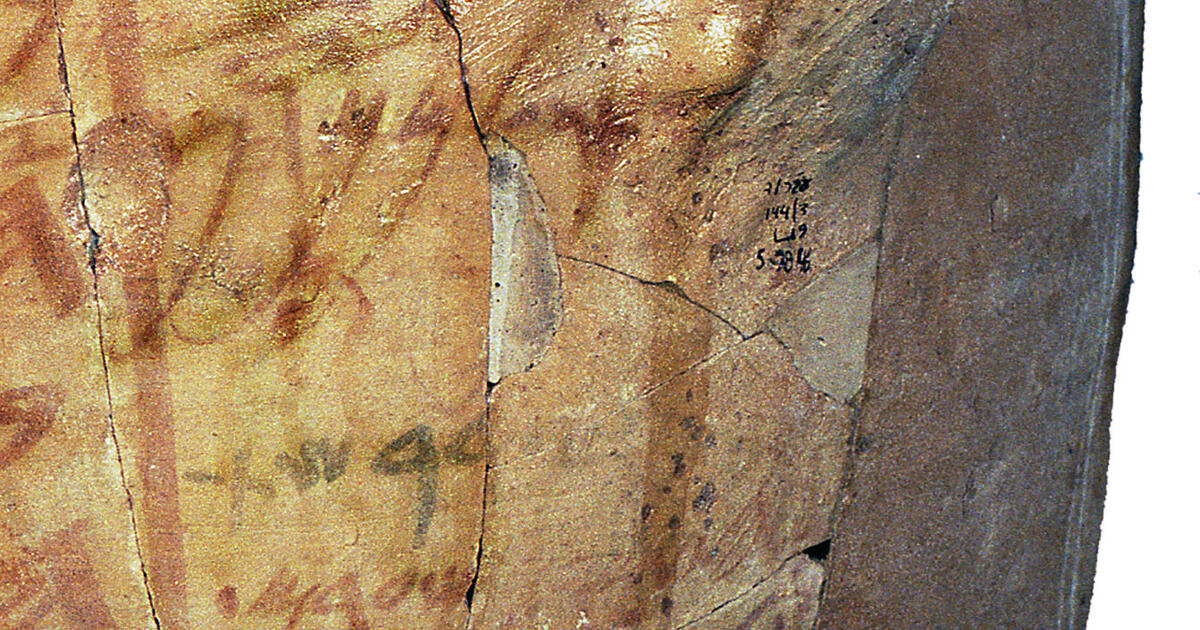
Image credit: Kuntillet ‘Ajrud, Pithos B abecedary, Jerusalem Museum.
part 2 of a series
Where did it come from (name)?
Primus autem Sapientiae gradus est, falsa intelligere (advirtió Lactantio) secundus, vera cognoscere.
The first step in wisdom is to know falsehood, (Lactantius observed) the second, to know the truth.
— Fr. Benito Feijoo, Voz del Pueblo (1732), I.1
The question of Where did 𐤉𐤄𐤅𐤄 come from? has produced a Noahic flood of theorizing but nary a trickle of agreement. It is a quest that continues to this very day, giving any number of scholars gainful employment. Now, if you are a “the Bible says it’s so” type, this inquiry will be of little interest to you, because the Bible says the “so” very clearly: “𐤉𐤄𐤅𐤄 came from Sinai and dawned from Seir upon us.”1 Seir was the name for a region south of the Dead Sea. It was part of (or, in some biblical texts, synonymous with) Edom,2 where lived the Edomites, the malign(ed) descendants of Esau.
Still, aren’t you just slightly concerned to think of 𐤉𐤄𐤅𐤄 as . . . a carpetbagger?
Nah, no chance. Don’t give it a thought.
If, on the other hand, you a) have too much time on your hands and b) have a morbid interest in investigations of the impossibly complex, ideologically riven and unresolved variety, you’ve found yourself in the right place. The hinge upon which the endless debate swings is whether 𐤉𐤄𐤅𐤄’s origins are to be found in the name or in the attributes associated with the name—the former becoming fixed, the latter changing in the telling.
To the former.
The discovery of Ugarit, the northernmost city on the coast of the Mediterranean Sea in modern Syria, can be construed as Amalthea’s cornucopia (if you’re an archaeologist or a historian) or Pandora’s box (if you’re a theologian—or worse, an apologist). Whichever, out of Urgarit—or Ras Shamra, as the archaeological site is named—poured a gush of texts that have kept scholars busy interpreting, disputing, dismissing or ignoring ever since. What is beyond dispute is that the Ugaritic texts paint a picture of the religious culture of the Levant in the Late Bronze Age. What is endlessly disputed is the extent to which they provide a framework for understanding the development of Israelite religion, including the origin of the god who must not be named.
Now, you might think that Israelites are special, chosen even. Ditto their god. Maybe so, or maybe at some point, but the Ugaritic texts have a whole lot of one-and-the-same when it comes to Israelites (whenever they percolated into distinction) and their neighbors. Put differently, you’d be hard pressed to see much difference when it comes to what they named a lot of things. Really important things.
So you’ll find cognate terms—which means they’re one (linguistically) but not the same. And not just cognate, like the English actually and the French actuellement, which are cognate but mean completely different things. No, these are super cognate, like English / French absurd / absurde, fantasy / fantaisie, idiot / idiote. (Which is how a cynic might fairly describe much of what passes for “scholarship” of the biblical variety. Super cognate.)
The most striking are cognates related to cultic activities. Compare Ugaritic / Hebrew in the following: “sacrifice” (dbḥ / zebaḥ), “altar” (mdbḥ / mizbēaḥ), “peace offering” (šlmm / šĕlāmîm), “sanctuary” (qdš / qōdeš), “priest” (khn / kōhēn), “cult garment” (ʾipd / ʾēpōd). So too the various victims subjected to desperate human efforts to satisfy their gods’ blood lust: cows, goats, birds—all cognate in their doomed namings.3
Add to that the gods and divine whatnots haunting both the Ugaritic texts and those of the biblical variety. So you find the four foes of 𐤉𐤄𐤅𐤄 and Baal both: Sea (ym / yām), Leviathan (ltn / liwātān), Tannin (tnn / tannīn) and Death (mot / māweṯ).4 Not to forget the usual cast of divine characters found in both textual corpora: El (ʾIl /ʾĒl), Baal (Baʿlu / Baʿal), Asherah (ʾAṯiratu / ʾǍšērāh), Anat (ʿAnatu / ʿAnat), Astarte (ʿAṯtartu / ʿAštārôt), Resheph (Rašap / Rešep̄) and so on.
Notably missing in the Ugaritic pantheon is 𐤉𐤄𐤅𐤄. Except, maybe not. The epic Baal Cycle, which chronicles the fraught rise of the Ugaritic god Baal, includes a scene where El seems to favor Yamm (Ym, “Sea”). He also seems to name a son, Yw. The text is badly damaged, missing half of each line, which allows for all manner of exegetical rambunctiousness. Compare the following translations of lines 13–20 of Keilalphabetische Texte aus Ugarit 1.1 IV. The translation in the right column below adds the negation l to yw in line 14, resulting in El prohibiting his son to be named as Yw. It also adds a phrase endorsing the name Ym—to remove all doubt.
| [13] And Beneficent El the Beni[gn] speaks: … | |
| [14] “The name of my son (is?) Yw, O Elat …” | [14] My son [shall not be called] by the name of Yw, O goddess, [but Ym shall be his name!] |
| [15] And he pronounces the name Yamm … | [15] So he proclaimed the name of Yammu. |
| [16] … they answer …… for sustenance (?) … | [16] [Lady Athiratu (?)] answered, “For our maintenance [you are the one who has been proclaimed (?)] |
| [17] “You, O Lord, you proclaim [his name (?)] …” | [17] You are the one who has been proclaimed ‘master’!” [And the Bull Ilu answered, (?)] |
| [18] “I, Beneficent El … | [18] “I myself, the Benevolent, Ilu the good-natured, |
| [19] Upon the hands … I pronounce … | [19] I have proclaimed [your name]. [Yammu is your name], |
| [20] Your name … Beloved of E[l …5 | [20] your name is Beloved of I[lu Yammu]”.6 |
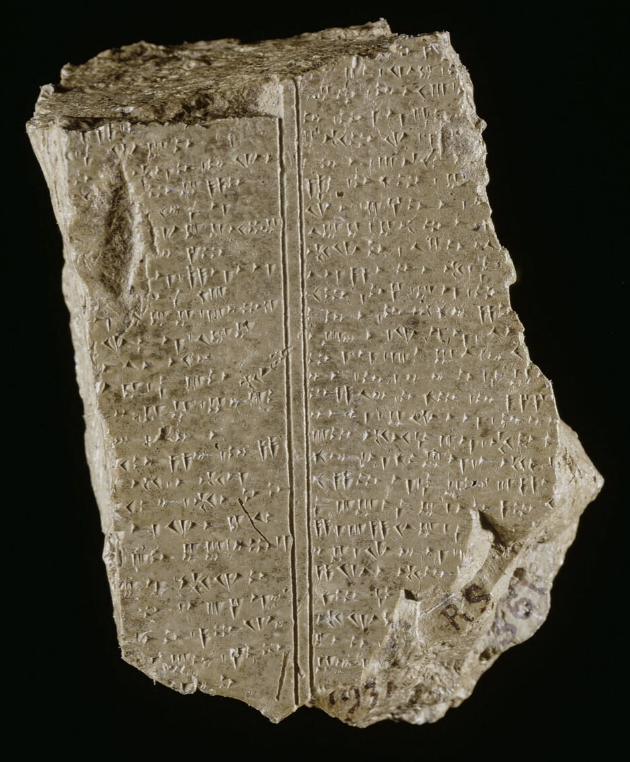
Could yw in line 14 be 𐤉𐤄𐤅𐤄? That possibility has been discussed,7 but the current consensus is decidedly negative.8 Endorsing that view is the fact that 𐤉𐤄𐤅𐤄 is known nowhere else in the Ugaritic corpus—in fact, no one knows what yw in the tablet means.9 Which renders it a thin thread from which to hang the name above all names on the Ugaritic sacred tree. And given the appearance of ym (Yamm) in the following line, maybe yw is just a scribal error, a slip of the stylus producing /w/ in place of /m/.10
With such cultural overlap in the religious worlds of Ugaritians and Israelites, the absence of 𐤉𐤄𐤅𐤄 in the northern pantheon is just . . . weird. It’s as if you had a precise location, the North Pole (Ugarit), a workshop (Ras Shama), elves (Baal, Asherah, Anat, Astarte, Resheph), toys (cuneiform tablets), a sleigh (Mediterranean Sea), reindeer (sacrifical animals)—even Mrs. Santa (Asherah)—but no sign of Santa (𐤉𐤄𐤅𐤄).
What’s a scholar to do? Come up with an ingenious solution, of course.
To wit: The common biblical title “YHWH of hosts” (𐤉𐤄𐤅𐤄 ṣĕbāʾôt) might have originated in an older cultic title, “El who creates hosts” (*ʾēl dū yahwī ṣĕbāʾôt),11 not unlike the Ugaritic epithets “El the king who created him” (ʾil malk dū yakaninu) and “El who creates” (ʾil dū yaqniyu). For this to work, yahwī has to be understood not as a noun (designating 𐤉𐤄𐤅𐤄) but as a verb meaning “creates” or “causes to be.” Which gives you not “YHWH of hosts” but “he creates the hosts.” In this telling, it was only after 𐤉𐤄𐤅𐤄 became identified with El or displaced El as the chief cultic name that the first element in the epithet, ʾēl, was replaced by 𐤉𐤄𐤅𐤄, now read as a noun, eventually collapsing into the familiar biblical title 𐤉𐤄𐤅𐤄 ṣĕbāʾôt.12 And there you have it: a hint pointing northward.
Confused? If so, you’re in good company. The phrase “El who creates hosts” does not appear in the Bible—or anywhere else. It’s “purely speculative,”13 the imaginings of a beautiful mind belonging to a man whose last name either referred to 𐤉𐤄𐤅𐤄’s salvific sacrifice or a bad mood: Frank Moore Cross.
Thus, disappointing all expectation, it would appear that 𐤉𐤄𐤅𐤄’s incarnation (as a name) is not to be found in the north.
Perhaps better luck is to be found in the south, which anyway is where 𐤉𐤄𐤅𐤄’s supposed to come from according to Moses, who should know if anybody does. Which has spurred scholars of a biblical inclination to leave no stone unturned in the search the sacred name in the remains of an empire destroyed not by 𐤉𐤄𐤅𐤄, as things turned out, but by Alexander the Great.
Some scholars see the name of the god they seek in a toponym inscribed on the grave stele of an Egyptian official from about 2000 BCE (see Handy Compendium, “Biography of Khety”). And wouldn’t that be great, as now there would be evidence of 𐤉𐤄𐤅𐤄 in the Middle Bronze Age, the time of the Patriarchs. Except, 𐤉𐤄𐤅𐤄 told Moses that Abraham, Isaac and Jacob knew a god named El Shaddai, not 𐤉𐤄𐤅𐤄.
Thutmose III, also known as Thutmose the Great, extended Egypt’s hegemony from Nubia in the south to Syria in the north in the 15th century BCE. It was the zenith of Egyptian power, only to be rivaled by Ramesses II some two centuries later. Canaan, so often stuck in the middle of great power contests, came under Egyptian rule thanks to Thutmose III’s efforts and remained in that state for over 300 years—a historical reality the biblical texts know nothing of. A combination of factors—external (drought, invasion of the “Sea Peoples”) and internal (a jealous queen stabbing Ramesses II in the neck in 1155 BCE)—weakend Egypt to the point that a group named Israel emerged as a cohesive enough nuisence that a pharaoh named Merneptah had to put them in their place around 1208 BCE (see Handy Compendium, “Victory Stele of Merneptah” below). All this happened before the Hebrew’s inaugural kings, Saul, David and Solomon, took to the stage—if in fact any of them actually did.
In the longue durée between Thutmose III and Merneptah, 𐤉𐤄𐤅𐤄 is scarcely to be found, unless squinting is to replace seeing, or hoping knowing. So it is that some scholars see the name of the god they seek in a tiny lead tablet inscription that seems to lack letters, dated 1400–1200 BCE (see Handy Compendium, “Mt. Ebal ‘curse tablet’”); or in the name of the owner of an Egyptian Book of the Dead, dated to sometime between 1330 and 1230 BCE (see Handy Compendium, “Egyptian Book of the Dead, Pharonic Roll 5”).
All of those squints are of the minority variety. What screws up the eyes of most every biblical scholar are lists of peoples subdued by the Egyptians and tabulated under the name “Shasu”—the Egyptian name for nomadic or semi-nomadic miscreants. One of these Shasu groups, identified in a cartouche as “the Shasu (of) yhwa,” appears in two lists. The first is that of Amenhotep III (ca. 1390–1352 BCE), the second of Ramesses II (ca. 1279–1213 BCE). (See Handy Compendium, “Soleb Temple of Amun-Ra” and “Temple of ‘Amarah-West.”) Both lists likely used a template of an earlier pharaoh, maybe one of the Thutmoses from the 15th century—which would be better than one could hope, because in that case, the epigraphic and biblical dates would align in the Late Bronze Age, the time of the Exodus. Despite the glyph for “land” (𓇾), which almost definitively indicates a toponym, a fair number of scholars have convinced themselves that yhwa is a theonym for the elusive 𐤉𐤄𐤅𐤄, the god of a southern group of homeless people right where Exodus would have them, among the Midianites.
In a recent volume of collected essays on the origins of Yahwism, the Egyptologists Faried Adrom and Matthias Müller were asked to contribute a chapter from a specialist perspective. They titled their contribution, “The Tetragrammaton in Egyptian Sources – Facts and Fiction.” In it they cast an expert eye on the various claims of finding 𐤉𐤄𐤅𐤄 in the Egyptian epigraphical record. Introducing their study, they noted:
Even though all involved authors usually point out the often rather speculative character of the Yhwh-discussion, even the most bizarre localisation and etymological attempts always find a grateful audience in the neighbouring scientific disciplines. In recent times, one has to observe that the debate on the origins of the Yhwh-cult has moved from referring to the primary Egyptian sources to quoting secondary literature of often doubtful standards.14
Ouch!
By the 14th century, somebody in Egypt realized they needed a bureaucratic solution to the chaos their vast holdings threatened to produce. Thus was established an administrative system to receive communications from local vassals in the Levant. Letters were sent from the hinterlands to Egypt and occasionally received a response. The system lasted no more than thirty years under the reigns of Amenhotep III and Amenhotep IV—the latter being the heretic pharaoh who thought only one god worthy of worship. 382 clay tablets have been recovered from this correspondence, collectively known as the “Amarna letters” for el-‘Amārna, the site of the heretic’s new capital, Akhentaten, where the tablets were first discovered.
Among the local vassals was the Canaanite chieftain of Jerusalem, Abdi-Heba, whose name means “servant of Ḫebat,” a Hurrian goddess. Officials of his station were often referred to as “mayors” (ḫazannu), but Abdi-Heba would have none of that. “I am not a mayor,” he wrote the pharaoh, probably Amenhotep IV, “I am a soldier of the king, my lord.”15 He never tired of complaining that he was being slandered by other officials and begging for reinforcements to fight off the invading ‘Apiru. On the latter topic, Abdi-Heba issued a dire warning: “If this year there are archers, then the lands and the mayors will belong to the king. But if there are no archers, then the king will have neither lands nor mayors.” Thinking a warning might be insufficient, Abdi-Heba resorted to shaming: “As the king has placed his name in Jerusalem forever, he cannot abandon it—the land of Jerusalem.”16
The ancient Near East was hemmorhaging gods in the 14th century, and the Amarna letters seemed to name them all: Egyptian (Amon, Api, Horus, etc.), Mesopotamian (Anu, Aššur, Baštu, Ninurta), Kassite (Ḫarbe, Šugab), Hurrian (Ḫebat, Iršapppa, Teššub), and Indo-Aryan (Índraḥ, Rta, Yamáḥ), as well as the general Semitic ([H]addu, Dagan, ʿAmmu) and West Semitic (ʿAnat, ʾAsherah, ʿAštart, Baʿlu, Beltu, El, etc.).17 You might think, given the mouthy not-a-mayor Abdi-Heba, that if 𐤉𐤄𐤅𐤄 was known in the city where the pharaoh had placed his name forever, he might be mentioned. But no, not a whisper.
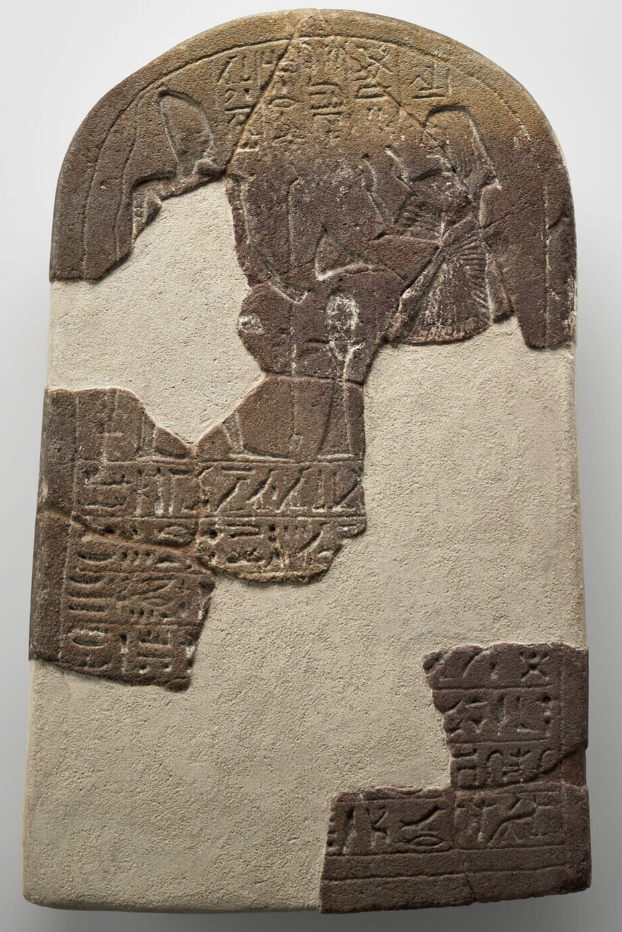
Like everybody in the Iron Age, Isra-El-ites for their entire biblical tale included, Egyptians were polytheistic. And like most everybody, Egyptians were happy to accommodate foreign gods, including those hailing from Canaan. The foreign cast included Baal, Reshef, Hauron, Anat, Astarte and Qadesh. Moreover, these invasive gods were venerated by all sorts of people, from the royals to commoners.18 Baal was far and away the favorite of the bunch;19 the only named iconographic depiction of Baal shows a deceased Egyptian royal scribe worshipping b’rdʒpwnʒ, “Baal-Zaphron.”20
Egyptian deities were graced with their own glyphs (𓁚 Ra, 𓁧, Ma‘at, 𓁩 Amun, and so forth), but what to do with interlopers? Fortunately, a scribal solution was ready to hand. Egyptian hieroglyphs included a set of signs indicating not a letter or a word, but categories of things. These are known as determinatives. They had them for all sorts of things, from the mundane (𓊛 boat, 𓆏 frog) to the judgy (𓅪 bad, small, weak), to the divine (𓅆 gods’ names in general). The solution for sojourners was to spell out the foreign deity’s name phonetically and then add a determinative to indicate divinity: the seated bearded man 𓀭 for the male variety, the cobra 𓆗 for the female. So you’ll find Qadesh spelled as ḳdš[t] followed by 𓆗, or Reshef spelled as ršpw followed by 𓀭.21 This convention was not always followed—foreign divinities could be named without a divine classifier—but what’s notable for the present purpose is that the divine classifier 𓀭 was not used in the lists of Soleb, ‘Amarah West or in a third topographical list at Medinet Habu, from the time of Ramesses II (ca. 1184–1153 BCE).22
That absence of evidence, in combination with a similar absence in the Amarna letters, counts as evidence of absence. The Egyptians did not did not know a god named 𐤉𐤄𐤅𐤄. Which must have been a bitter pill to swallow for a murderous deity who confidently predicted to Moses in Exodus 14:
“Then, because of what I do to Pharaoh and his entire army, I will receive honor, and the Egyptians will know that I am 𐤉𐤄𐤅𐤄.”
Maybe it’s just that 𐤉𐤄𐤅𐤄 was a late bloomer. Blossom he did, but not until later. Much later—and in Canaan.
The famous and mysterious demise of the Late Bronze Age in the eastern Mediterranean was bad for incumbent empires. The Hittite empire, which had controlled Anatolia and the Levant, collapsed entirely. New Kingdom Egypt and the Assyrian Empire in Mesopotamia survived, but severely weakened. In contrast, it was good for would-be kingdoms in the Levant; it was their chance to shine. But in order to seize the opportunity, rivals had to be put to the sword.
It’s in that context that you find the 10th century Kingdom of Samaria (aka Israel) in a mess of late republican Roman proportions. In the biblical tale, Jeroboam I revolted against Rheoboam, Solomon’s son and the last king of the United Monarchy. Not the most brilliant move, as it touched off nearly 50 years of civil war. Though, in Jeroboam’s defense, he had reason to be a little touchy: Solomon had tried to kill him after the the profit Alijah (“brother of 𐤉𐤄𐤅𐤄”) told Jeroboam that none other than 𐤉𐤄𐤅𐤄-Elohim of Israel (not Judah) said, “I am about to tear the kingdom from the hand of Solomon and will give you ten tribes.”23 Jeroboam ruled for a couple of decades and was followed by his son Nadab, who was killed by Baasha, who spent his couple of decades on the throne warring with the Judahite king Asa. Baasha’s successor Elah, a notorious drunk, was killed by Zimri, who lasted only seven days before the commander of the now-dead Elah’s army, Omri, revolted and laid seige to Zimri’s palace in Tirzah. Zimri, seeing the writing on the wall, killed himself by setting the palace on fire. Omri had been proclaimed king by his army, but it would be another four years before he could consolidate power by defeating the rival claimant to the throne, Tibni.
As an aside, it beggars imagination that educated individuals in the 21st century CE a) believe that tale to be rigorously historical, including 𐤉𐤄𐤅𐤄-Elohim’s role, and b) even if so, declare it Good, True and Beautiful—with 𐤉𐤄𐤅𐤄 the divine paragon of an ethical tradition lacking in other cultures. That’s not to suggest that ancient tales are science fiction; they include actual memories of times past. So, for instance, you’ll read of chariots and shields and spears and helmets in Homer’s Iliad. Such armaments existed, but that doesn’t mean you have to believe that Apollo a) existed, b) actually smacked Patroclos on the head so hard as to make his eyes “flash sparkles,” allowing Hector to finish him off with a lance-borne mortal wound, or c) serves as a moral exemplar to be taught to youngsters. But, whatever.
Omri became the undisputed king of Israel in 884. He founded Samaria as his royal capital and built a dynasty to rival any in the Levant. Under the Omrides, massive fortified cities were built, most notable among them Megiddo, Hazor and Gezer. Rock-cut tunnels were dug deep below the cities to provide a secure source of drinking water, even in times of siege. Moab was reduced to a tributary state. Omri’s son Ahab forged alliances the as royals are wont to do, marrying Jezebel, the daughter of the king of Tyre, and marrying off his daughter, Athaliah, to Jehoram of Judah. For his part, Jehoram (“𐤉𐤄𐤅𐤄 is exalted”) must have thought the marriage insufficient to secure his royal seat, so he exalted his brothers and a few Israelite bureaucrats to their final reward.24 Never can be too safe.
Judah at this time was a backwater, with a small population living in a few small towns—more a kinglet than a kingdom. No archaeological evidence suggests that Judah was anything other than a minor, unimportant realm in the 9th century, not to be compared with the major regional players: Israel, Aram-Damascus and the Phoenician city-kingdoms (Tyre, Sidon, Byblos).25 Which may explain why Judah is called a “thornbush of Lebanon” and Israel a “cedar of Lebanon.”26 It’s even been suggested that Judah was a vassalage of the Omride dynasty,27 a perspective that would seem to be endorsed in some biblical narratives.28
Would-be kings in those days needed a few things: money, a standing army, fortified cities, a distinct script and a national god. Everybody had their tutelary deity—because they were so handy: they endowed the monarch with legitimacy, they guarded the realm, they assured victory in battle and—perhaps most important—they gave the plebs a collective identity. In Aram-Damascus it was Baal-Hadad, in Tyre it was Melqart, in Sidon it was Eshmun, in Phoenicia it was Melqart-Baal, in Ammon it was Milkom, in Edom it was Quash, in Moab it was Chemosh.
The Omrides’ success in expanding their realm presented a challenge. At the height of the dynasty, they ruled over a multiethnic kingdom whose core included highland Israelites, mixed Canaanite-Israelite lowland populations in the Jezreel and Jordan valleys, Galilean and Gileadite groups, and Moabites east of the Sea of Galilee. The religious world of the peoples of those regions was broadly Canaanite: highland and lowland communities worshipped Baal, Asherah and related West Semitic deities; Transjordanian communities had the same pantheon, with the addition of Moab’s Chemosh. How to pull that mess together into a coherent polity?
Brutality and intimidation would be one way, and the Omrides had no hesitation employing such tactics. Another way would be to adopt a dynastic god palatable to all. El had faded into the pantheonic background a bit, and Baal was so ubiquitous as to be redundant. Something new was needed, something distinctive.
Before the 9th century, there is no extra-biblcal evidence of 𐤉𐤄𐤅𐤄 in Israel, Judah or the Transjordan. Which makes it somewhat noteworthy that Ahab gave all of his children Yahwistic names for the first time in the history of Israel: Ahaziah (Ăḥazyā, “Yah has grasped”), Jehoram (Yəhorām “Yeho is exalted”) and Athaliah (Ăṯalyā “Yah is my strength”).29 Was it by exalting 𐤉𐤄𐤅𐤄 that the Omrides grasped the throne and through his strength maintained power? In the biblical texts you’ll read of “𐤉𐤄𐤅𐤄 of Israel” often enough, but never “𐤉𐤄𐤅𐤄 of Judah.”30
Ahab’s naming habits constitute compelling evidence that the Omrides adopted 𐤉𐤄𐤅𐤄 as their dynastic deity. Could it be that they did more than adopt?
Could the Omrides have minted 𐤉𐤄𐤅𐤄?
If that seems a stretch, consider the Moabites. They first appear in the historical record from a colossal statue erected at Luxor by pharaoh Ramesses II in the 13th century BCE, which names Mu’ab as one of the Asiatic peoples the pharaoh conquered with the help of his tutelary god Amun. Where things get really interesting is their appearance in the Mesha Stele, a large victory monument dated to ca. 840–810 BCE, in which King Mesha brags about his defeat of the Omrides (see Handy Compendium, “Mesha Stele”). The language of the stele is Moabite; surprisingly, the script is Old Hebrew31—a legacy of Omride rule. The biblical version of the story is told in 2 Kings 3, though with a different god winning the day. In both versions, the gods are angry with their people: Chemosh is pissed off at the Moabites (“for Chemosh was angry at his own land”32)—which is why the Omrides were able to oppress Moab in the first place—and 𐤉𐤄𐤅𐤄 is, as ever, pissed off at the Israelites (“great wrath came upon Israel”33)—for reasons unclear.
A lot of ink has been spilled over 𐤉𐤄𐤅𐤄’s wrath at his chosen people for one reason or another: breaking his edict (“covenant”), worshipping other gods, sleeping around with foreign women. So much ink, in fact, that you would think a god behaving with such caprice was unique in history. Nothing could be further from the truth. The gods of the ancient Near East were always getting pissed off, occassionally with other gods but most often with their own people.34
What’s important for the present purpose is the surprising appearance of Chemosh. Nobody knows where he came from. Attempts have been made to figure out what the name means35 and where it originated.36 The simpler (thus most likely) explanation is that a Moabite king invented him, possibly Mesha’s father, who is named in the first line of the stele: “I am Mesha, son of Chemosh[yatt]” (“Chemosh has given”). Which wouldn’t be all that surprising in those fertile days:
Strikingly, Chemosh is the particular god of the Moabites (as opposed to a general Semitic deity like Baal or El), and Moab is “his land.” Chemosh arises as a national deity in Moab just as Yahweh appears in Israel and Judah. Throughout the southern Levant we see the rise of such national gods.37
Mesha faced a similar, if smaller, challenge to that of the Omrides. No evidence of Moab as a integrated state exists before him.38 His goal was “to make the case for the existence of this new entity ‘Moab’ in opposition to smaller, more complicated tribal groups within Moab and the external enemy kingdom of Israel to the north.”39 Chemosh, credited by Mesha for all the good work accomplished, was part of that effort, which required something close to genocide:
And Chemosh said to me: “Go, take Nebo from Israel!” So I went by night and fought against it from the break of dawn until noon, and I took it and slew it all, seven thousand men and boys, women and girls, and pregnant females, for I devoted it to Ashtar-Chemosh.40
If you read the entire inscription (see “Handy Translation: The Mesha Stele”), you won’t be able to help but notice that Chemosh is indistinguishable from 𐤉𐤄𐤅𐤄. Chemosh commands Mesha to go to war (cf. 1 Kings 22:15), he grants victory (cf. 2 Chronicles 20:15–17, 22), he endorses mass killings of defeated peoples (cf. Joshua 6:17–21), he names without hesitation and in full the god he defeats (cf. 1 Samuel 5:1–5), he receives war booty (cf. 2 Samuel 8:11–12), he restores the land (cf. 2 Kings 14:25–27). If the river of history had meandered in a slightly different direction, you would be worshiping kmš (𐤊𐤌𐤔) and making pilgrimages to the holy land of Jordan. Scholars would spend centuries tracing (or imagining) 𐤊𐤌𐤔’s origin.
You may object that the idea that the Omrides invented 𐤉𐤄𐤅𐤄 is a hypothesis made of whole cloth—a just-so story. That’s fine, but it arguably fits the evidence better than the suggestion that 𐤉𐤄𐤅𐤄 was invented by some tribe milling around in the deep southern Levant nearly half a millennium before popping up in Canaan. You have to squint pretty hard to connect those dots:
The Shasu of the yhw3-land seem to be the best candidate presently for the old context of YHWH-cult. Such Shasu may not have been in contact with early Israel, and thus they may not have provided a direct point of transmission of the cult of Yhwh to Israel. Instead, a further cultural conduit perhaps via the Shasu of Seir and/or Edom may have mediated the cult of YHWH more broadly to Midianites or Kenites, peoples that biblical memory recalled as the southerners that Israel knew. If so, biblical tradition did not preserve the memory of the earlier people among whom its deity had earlier enjoyed cultic devotion.41
Extra-biblical evidence of the divine name might also be found in an inscription from Gezer dating to the early 9th century listing agricultural seasons. Its author, Abi (’by), may be a shortened form of Abiyah (“my father is Yah[weh])”; see Handy Compendium, “Gezer calendar”). Fragmentary inscriptions from Tel Dan from around the same time seem to have Yahwistic names familiar from the sacred texts: Jehoram and Ahaziah (see Handy Compendium, “Tel Dan Stele”).
If biblical evidence is more to your liking than the extra-biblical variety, you’re in luck. Setting aside the second king of Judah (914–911 BCE)—who had the name Abijam, “Son of Yam” in 1 Kings, the sea god whom Ugaritic El favored, until the scribes cleaned that up in 2 Chronicles, renaming him Abijah, “Son of Yahweh”—it was in the 9th century when Yahwisitic theonyms first begin to bloom in the names of both Israelite and Judahite kings (and one queen). By the 8th century, it’s like daisies on a spring lawn; they’re everywhere (see Handy Tables “A: Israelite Monarchs” and “B: Judahite Monarchs”). And at long last, Egypt learns of 𐤉𐤄𐤅𐤄 the god. In the closing years of the 7th century, Pharaoh Necho raised Eliakim (“El rises up”) to the Judahite throne and changed his name to Jehoiakim (“𐤉𐤄𐤅𐤄 raises up”).42
A similar process can be seen in Edom. Beginning in the 8th century, theophoric names for their tutelary deity, Quash, appear in royal names: Qaushmalaka (“Qaush has become king”) Qaushgabri (“Qaush is powerful”).43
As with the kings, so with the people. Non-royal Yahwistic theonyms appear in Hebrew inscriptions in the same period, with 𐤉𐤄𐤅𐤄 eclipsing all other gods, even El. Of particular interest is the comparison of Hebrew names bearing marks of divinity with neighbors in Canaan: the Ammonites (who traced their ancestry to Ben-Ammi, a son of Lot) and the Moabites (descendants of Moab, another son of Lot). Onomastic evidence suggests that all three peoples had a relatively sparse group of gods as compared with other Near Eastern cultures—a phenomenon known as “pantheon reduction.”44 Of the 1,978 instances in the Hebrew dataset, 67.6% are derivatives of 𐤉𐤄𐤅𐤄 and only 11.1% are derivatives of El.45 That, by the way, is a higher ratio than is found in the Hebrew Bible, where 𐤉𐤄𐤅𐤄 outnumbers El by only about 130 to 120.46
If you’re tempted to see the prominence of one god at the expense of a reduced number of others as a sign of nascent monotheism, fair enough. But by that metric, the most “monotheistic” group would not be the Hebrews, but the Ammonites. A whopping 81.8% of theophoric names in their dataset reference El. What is unique in the Hebrew set is not the predominance of a single god, but rather the predominance of 𐤉𐤄𐤅𐤄 the dynastic god.47 The Moabite national god Chemosh comes in at only 40.5%, and the Ammonite national god Milkom gets barely a mention at 1%.
Theophoric elements in personal names (national deities highlighted)
| Hebrew (n = 1,978) | Ammonite (n = 209) | Moabite (n = 42) | |
|---|---|---|---|
| Divinized designations of kinship† | 12.10% | 9.60% | 28.60% |
| El, ‘ēlī (“El, my god”) | 11.10% | 81.80% | 11.90% |
| -yāhû, -yāh, Yěho ect. (“YHWH”) | 67.60% | 0.50% | 0.00% |
| Kamōš (“Chemosh”) | 0.00% | 0.00% | 40.50% |
| Mīlkōm (“Milkom”) | 0.00% | 1.00% | 0.00% |
| Ba’al (“Baal”) | 1.00% | 0.50% | 7.00% |
| Adad (“Hadad”) | 0.00% | 0.50% | 2.50% |
| Other West Semitic deities | 6.10% | 5.60 | 9.50% |
| Egyptian deities | 1.20% | 0.00% | 0.00% |
| Mesopotamian deities | 0.00% | 0.50% | 0.00% |
| Divine characteristics‡ | 0.90% | 0.00% | 0.00% |
| Total | 100.00% | 100.00% | 100.00% |
†E.g., ’āb, “divine father”; ’ēm, “divine mother”.
‡E.g., šem, “name”; ‘ezrī, “my help”; ‘alay, “the exalted”.
An old saying goes, “A language is simply a dialect that has an army and a navy.”48 Which is pretty much the way to understand the emergence of national scripts in the 9th century Levant. The first such scripts to develop from the Phoenician Mutterschrift were Aramaic and Hebrew,49 the latter giving birth to Moabite, Edomite, and Philistine.50 The northern Syrian states that had used Phoenician now began to write in a distinctive Aramaic script,51 and so on. None of this was organic, none just linguistic drift. The Phoencian script was deliberately re-engineered to produce local writing forms.52 In the catalog of nations in Genesis 10, populations are identified along four axes: “their lands, with their own language, by their families, in their nations.”53 For the emerging Levantine kingdoms, a language written in “their own” script helped forge nations from families.
So it is that in the late 9th century Hebrew is first known as a distinct script in the epigraphic record, produced by scribes formally trained by the state.54 Most of the inscriptions deal with matters of state administration.55 The script was “a nationalistic statement, not an evolutionary process.”56 This would be the first time the Hebrew language was a chisel used to sculpt a national identity. The second time came nearly three thousand years later, when Eliezer Yiẓḥak Perelman argued that Jewish national renewal required a common Jewish language. Perelman, who adopted the pseudonym Ben-Yudah, is known as “the father of modern Hebrew.”57
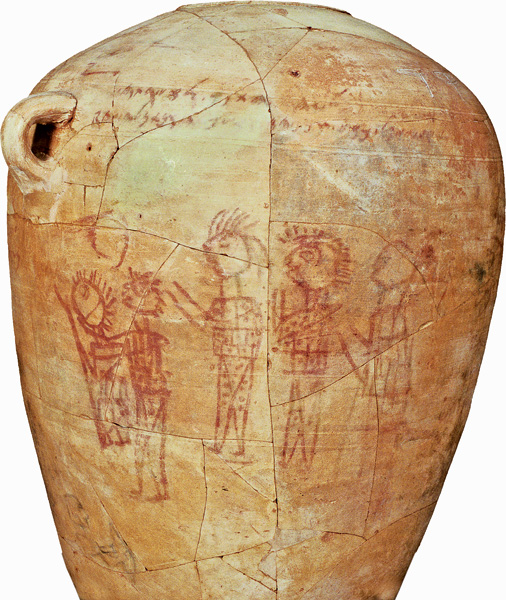
Dramatic examples of the novel Hebrew script were found at a desert fortress or way-station in the Sinai Peninsula. The texts speak not of matters of state, but matters of devotion. 𐤉𐤄𐤅𐤄 appears in a pantheon including El, Baal and Asherah, 𐤉𐤄𐤅𐤄’s consort. Intriguingly, 𐤉𐤄𐤅𐤄 is not one, but two: 𐤉𐤄𐤅𐤄 of Samaria, the capital of the northern kingdom, and 𐤉𐤄𐤅𐤄 of Teman, the land of the Edomites. Theophoric names—šknyw (Shekanyaw), šmryw (Shemaryaw), ’lyw (Eliyaw) and ‘zyw (Uzziyaw)—all bear the Israelite theophoric element –yw, in contrast to the Judahite –yhw. The site is believed to have been a southern outpost of the northern Kingdom of Israel (see Handy Compendium “Kuntillet ‘Ajrud inscriptions”).
The ultimate origin of 𐤉𐤄𐤅𐤄, the name, is lost to history. But the origin of 𐤉𐤄𐤅𐤄, the national god of Israel and (later) Judah, would seem not to be. He, like the language that recounts his various exploits, was the result of an emerging dynasty calling a nation into existence.
To put this tiresome excursion to bed—and just to make a mess of things, if not mess enough already—two questions.
First, wherever the name came from, whoever got the idea that, once in use, there was only one 𐤉𐤄𐤅𐤄? In the search for a single point of origin of 𐤉𐤄𐤅𐤄, how is it that pretty much everyone chewing this bone has failed to consider that different cultic centers might have had quite distinct memories of the god,58 not only pertaining to the name and where it came from, but also to his nature (i.e, attributes, the subject of the next tiresome excursion)? If that were the case, 𐤉𐤄𐤅𐤄 would be unique among all other major deities in antiquity.
To take an obvious example, the Greek equivalent of 𐤉𐤄𐤅𐤄, Zeus by name, had competing origin stories—to the extent that Callimachus begins his Hymn to Zeus, “How shall we sing of him—as lord of Dicteo [mountain in Crete] or of Lycaeum [mountain in Arcadia]? My soul is all in doubt, since debated is his birth.”59 Worse still, Zeus’s very nature (attributes) had irreconcilable imaginings: at Olympia (on the Peloponnese peninsula), Zeus was the majestic Panhellenic god of order, but at Mt. Lykaion (in Arcadia), Zeus was a chthonic deity, associated with infant sacrifice.
Ditto 𐤉𐤄𐤅𐤄. In the various biblical accounts he came from Egypt,60 or the desert 61or Midian62 or Sinai63 or Seir64 or Paran65 or Teman.66 He’s associated with different cultic objects: calves67 or a serpent,68 or an ark whose very presence dismembers a competing god and causes a cancerous epidemic.69 Sometimes he’s like Baal (nasty),70 other times like El (nice).71 Sometimes he requires child sacrifice, sometimes he claims the thought never entered his head.72 And yet, biblical scholarship has “rushed into the question of the undifferentiated origin of Yhwh.”73 Another example of special pleading, however conscious, that uniquely infects the field of biblical scholarship.
Second, what is the relation between 𐤉𐤄𐤅𐤄, or, more properly, Yahwism, and Judaism? As scholars studying the history of Israel at long last adopt the methodology practiced in the historical study of every other ancient culture—that is, privileging the material record over, say, the historicity of the Sumerian Enuma Elish or the Akkadian Epic of Gilgamesh or the Egyptian Contendings of Horus and Set or Hesiod’s Theogony or Homer’s Iliad—a more accurate picture of the origins of Judaism (as distinct from Yahwism) comes into focus.
The answer before the second century BCE seems to be . . . nothing. If Judaism is to be defined as knowledge of and at least lip-service-adherence to the Torah, you’ll be hard pressed to find any material evidence for it before the Hasmonean revolt in the mid-second century BCE.74
If your Bible is the only tale you know of 𐤉𐤄𐤅𐤄 and his people, you know neither.
Oh, a minor correction: “nothing” is too much. Judaism and Yahwism shared one little something, a name—𐤉𐤄𐤅𐤄.
HANDY COMPENDIUM OF EARLY EXTRA-BIBLICAL
SOURCES PERTINENT TO 𐤉𐤄𐤅𐤄
Biography of Khety
11th Dynasty (ca. 2000 BCE)
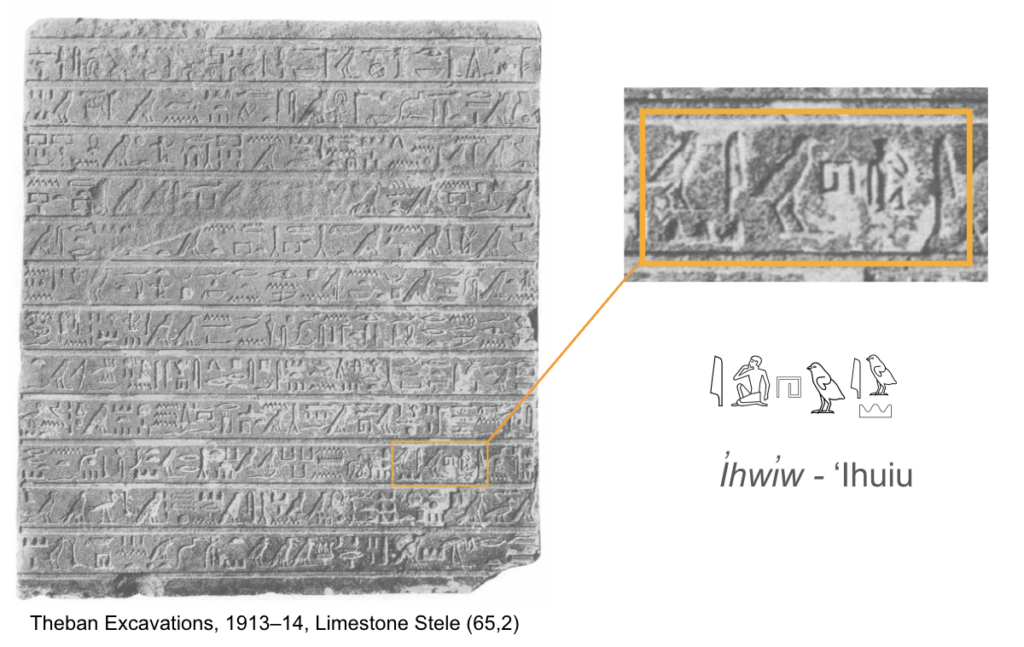
Limestone stele from the Tomb of Khety (also known as TT311 or MMA 508), a Middle Kingdom rock-cut tomb located in the Theban Necropolis at Deir el-Bahari.
During the 1913–14 excavation of the Theban necropolis at Deir el-Bahari, archaeologists from the Metropolitan Museum Expedition unearthed the tomb of a man named H̱ty, who, due to the inherent ambiguity of abjads, came to be known to speakers of the King’s English variously as Khetty, Ahktoy and Khety, the last having become somewhat fixed. However his name might be tortured, H̱ty had an elaborate tomb befitting his station75—and an ego to match. On one of three stelae describing his exploits, H̱ty proclaims:
A boon which the King gives, and Osiris lord of Busiris,76 the great god, lord of Abydos, voice-offerings belonging to the treasurer of the king of Lower Egypt, the unique friend, the revered, the sea-captain [lit. “superintendent of a (sheet of) water”] Akhthoy.77
For present purposes, most of interest is H̱ty’s travels undertaken in his various official roles. You can feel the swelling pride H̱ty took in his work:
[l.9] (…) I returned in peace to his (the king’s) palace (ꜥḥ.f) and brought him the best of the foreign lands in new metal from Bau(t), [l.10] shining (psḏ) metal from Ihuiu, hard metal from Menkau; turquoise from Hererut and lapis lazuli from Tefreret, [l.11] best Saherut from the mountains, Khetauau from the mountain of Hesa/Heset; Ranetjet from Baq-[l.12] Desheret, staffs (mdw.w) from Rashaut and Mesdjemet from Kehebu.78
H̱ty lists a number of places he visited, only one of which can be tentatively identified: Bi‘ew, “mineral country,” likely somewhere in the Sinai, as the toponym appears on monuments found in that dry land.79 Another place that H̱ty names is Ihuiu, whence he procured “shining metal.” In an article on the toponyms listed in the Soleb temple of Amun Ra, a member of the Department of Archaeology and Near Eastern Cultures at Tel Aviv University, Raphaël Giveon by name, mentioned in passing that Ihuiu might be an early orthography of later toponyms that hint at the Tetragrammaton.80
Most scholars reject the association, but some still hold out the possibility that Ihuiu “may indicate a very early occurrence of the name 𐤉𐤄𐤅𐤄 and his earliest link with Sinai.”81 To be fair, one can imagine how Egyptian scribes might struggle to represent Asiatic names (of whatever sort, divine or mundane) in such a clumsy writing system, just as English speakers struggle to name H̱ty in a slightly less clumsy writing system. Consider the four occurrences that Giveon mentioned (hieroglyphs reversed to read left-to-right):
Thebes (ca. 2000 BCE): 𓇋𓉔𓅱𓇋𓅱 – ihwiw
Soleb (1390–1352 BCE): 𓇌𓉔𓍯[𓄿] – yhw[a]
‘Amara West (1279–1213 BCE): 𓇌𓉔𓌗𓄿 – yhwa
Medinet Habu (1184–1153 BCE): 𓇋\\𓇋𓉔𓄿 – yha
Whether or not Ihuiu names a god (which is something of a stretch), it certainly names a place. The glyph 𓈊, “three hills” is a determinative for “foreign land” (ḫꜣst), thus a toponym.
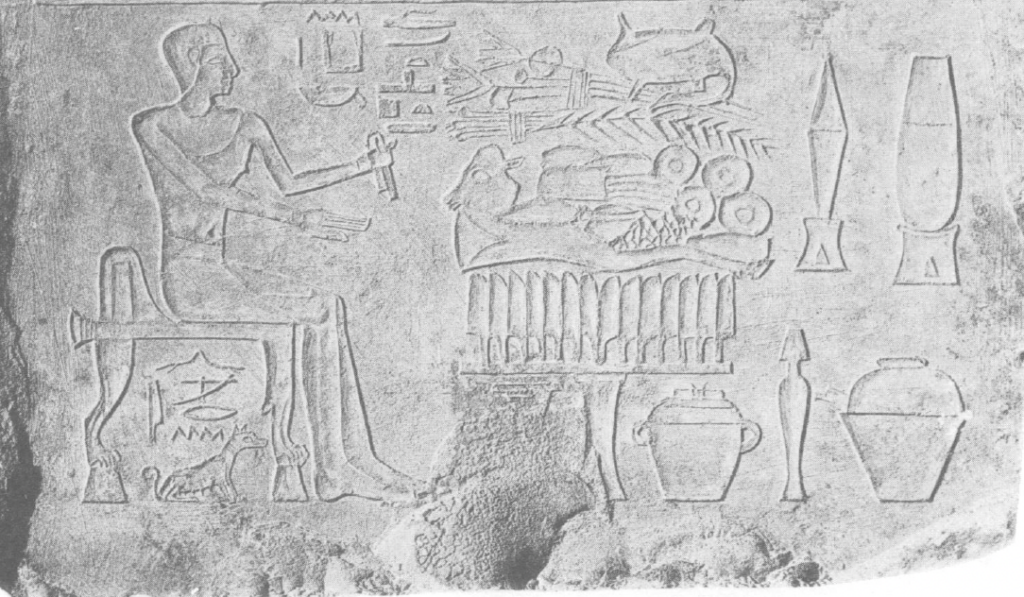
H̱ty, efficient in executing his offices for the king and Osiris (which included punishing “Asiatics,” stealing precious gems and metals from “the Northerner,” and generally “making impotent the foreign lands”82—not so unlike 𐤉𐤄𐤅𐤄 himself, in his warring days), was not much of an animal lover. He is pictured seated, napkin in hand, at a table piled high with offerings. Under his chair is his pet dog, named En-merni, “I don’t like.”
Mt. Ebal “curse tablet”
Provenance and date unknown; dated by authors ca. 1400–1200 BCE
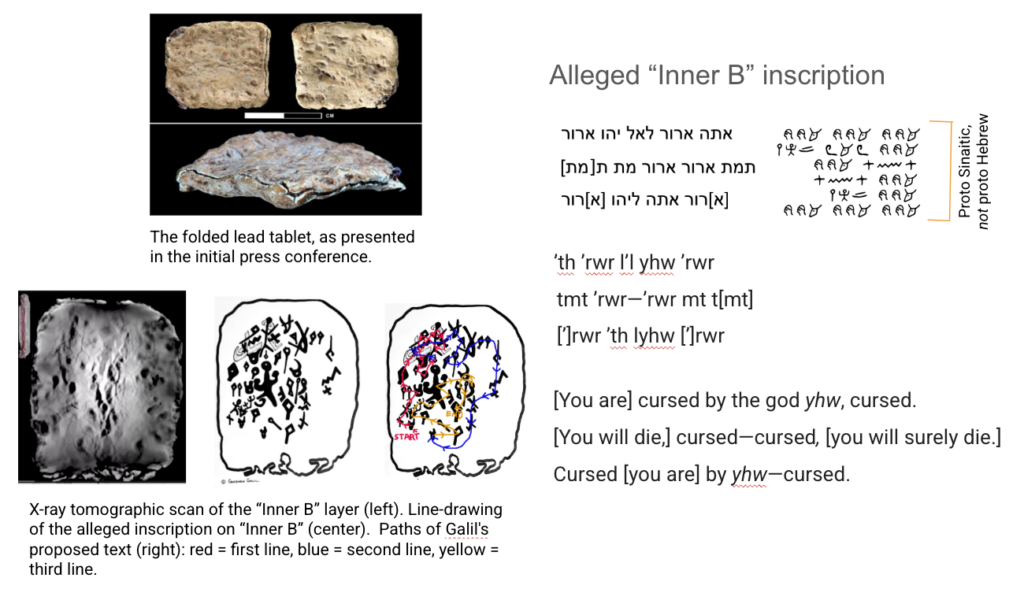
On March 29, 2022 a press conference was held at the Lanier Theological Library in Houston, Texas that was supposed to change the understanding of the Bible fundamentally: its date, its historicity, its testimony to the reality of its god yhw. Presented was “the most important inscription ever found in Israel,” dating to the end of the 13th century BCE, written by a scribe who was a “genius,” who “believe me, could write every chapter in the Bible.”83
The inscription was said to be on the interior of a lead defixio, or “curse tablet,” measuring a scant 2 cm × 2 cm × 0.3 cm (about 3/4 of an inch square x 4/16″ thick). The tablet was sealed such that to open it would be to destroy it. So the team that had made the find recruited the Institute of Theoretical and Applied Mechanics of the Czech Academy of Sciences to use X-ray tomographic measurements to scan slices of the text, much like a CT scan.
The lead object was discovered in 2019 in a salvage project that involved dry- and then wet-sifting84 part of a dump pile from a 1982–1989 excavation on Mt. Ebal in the West Bank. The director of the original excavation was Adam Zertal of Haifa University. In 1987 Zertal published what he interpreted to be a cultic installation with a large burnt-offering altar, identifying it as the altar Joshua is said to have built on Mt. Ebal in Joshua 8:30–35.85 His interpretation was and remains a matter of hot debate: some see a cultic site but hesitate to speculate further. Some suggest a cultic site for an altogether different god, maybe El-Berith or Baal-Berith. Still other’s see a watchtower, a house, a flint factory. The team conducting the salvage project had no such doubts: the installation was unquestionably Joshua’s altar.
The 2022 press conference was held before the object was formally published, which raised eyebrows among archaeologists. As did the organization that conducted the salvage project: the Associates for Biblical Research (ABR)—not because the organization used “biblical” and “research” in their name. That’s all well and good. It was, rather, because of their mission statement:
In these days of intense spiritual battle, God has called ABR to step into the gap to contend for the truth and to assist the church in this critical hour. ABR is a non-profit ministry dedicated to demonstrating the historical reliability of the Bible and to give answers to questions being asked by believers and non-believers alike. We do this by using original archaeological fieldwork and research along with studies in other apologetic disciplines. We take on the bold claims of skeptics and critics. We challenge the bizarre anti-biblical propaganda that is purveyed upon the public as gospel through television and print media. We uphold the gospel of Jesus Christ, which is God’s message for the salvation of all mankind!86
Step in they did. The lead object was published in 2023 in an open-access journal under the title, “You are Cursed by the God YHW:” an early Hebrew inscription from Mt. Ebal.”87 Its lead authors were Scott Stripling, Director of Excavations for ABR and provost at The Bible Seminary in Katy, Texas; Gershon Galil, Professor of Biblical Studies and Ancient History at the University of Haifa; and Pieter Gert van der Veen, Associate Professor of Levantine Archaeology at the Johannes Gutenberg-University of Mainz, Germany.
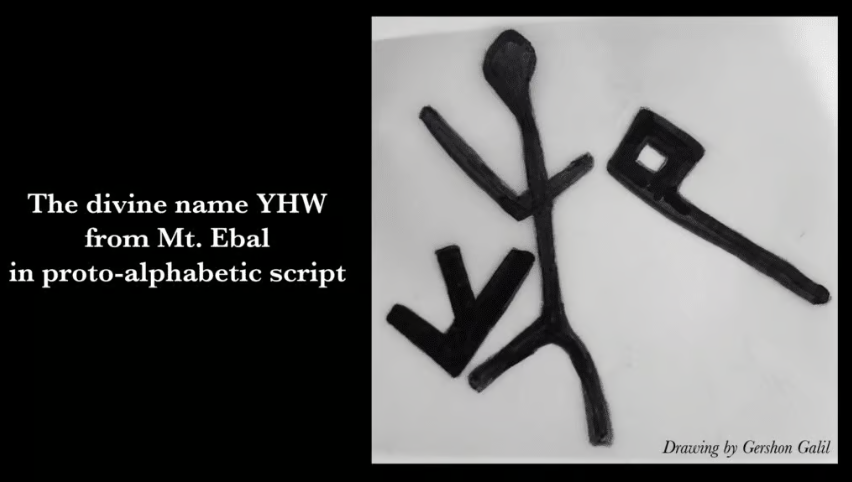
Their claim is that the photographs produced by the Czech Academy reveal letters, 48 of them, in a proto-alphabetic script that they identify not as Proto-Sinaitic or Proto-Canaanite, but in a heretofore unknown “proto-alphabetic (=Proto-Hebrew) script.”88 And the letters form words, which form a curse, which identify the god in whose name the curse was invoked, El and YHW both: “‘la’l YHW’ (‘by [the] god, YHW’),” El used as “an appellative, qualifying the name YHW, Israel’s supreme god.”89 If true, it would be a very big deal indeed, as it would predate “any previously known Hebrew inscription in Israel by at least 200 years.”90
The reception among the faithful might be fairly characterized as Hallelu-yah! Among professional archaeologists and epigraphers, not so much: none outside of the ideological orbit of ABR accepts the claims made by Stripling and his co-authors. Why might that be? Disgust at being called “skeptics and critics” by those girded for “spiritual battle”? No, because of the many problems in the claim. To name a few:
- The dump pile had been sitting unattended for over 30 years since the excavation of the site. It could have been disturbed, the object may have been brought in long after the original excavations. Thus, its provenance cannot be established.91
- The dirt was moved by the ABR team from the excavation site to another site for processing, eliminating any stratigraphy, thus dating.92
- Curse tablets appear in the archaeological record in the 4th century BCE (not the 13th century), but never in the context of Israelite culture or Yahwistic cult.93
- The proposed direction of the text is untenable. Early alphabetic texts (Proto-Canaanite, Proto-Sinaitic) appear running dextrograde (left-to-right), sinistrograde (right-to-left), boustrophedon (literally, “as the ox plows,” left-to-right and then right-to-left and back again) and columnar (i.e., vertically). No example exists showing all directions in a single text, let alone in a single word.94 “The ‘inscription’ is a mishmash, basically a ‘salad’ of letters. . . .”95
Most damning of all is the inability of professional experts to see any letters in the tablet. “In this case, the putative 48 letters are simply not present.”96 “The only substantiated claim that Stripling et al. can make at this time is that they have found a very old, small piece of folded lead on Mt. Ebal using wet-sifting. . . . [T]here is currently insufficient epigraphic evidence to conclude that writing exists on the interior or exterior of this folded piece of lead.”97 “The men making this claim say [the piece of lead] has an inscription inside. There’s nothing there. This is a Rorschach test.”98 And:
I correspond with two epigraphers who expressed similar views to those of Maeir and Rollston. Benjamin Sass wrote: “I am unable to see the letters that the authors have drawn. The drawings reproduce a hodgepodge of sunken zones in the lead, as well as raised zones, and shadows or darker zones in the lead surface besides.” Anat Mendel-Geberovich wrote that she cannot identify any letters in the published photographs and that the visible signs appear to result from natural erosion and weathering of the object. In her view, there is no actual relationship between the published photographs and the drawings, and the authors’ interpretation is false from several points of view, including anachronistic orthography.99
Facing such a withering critique, it didn’t take long for the ABR team to fracture. Gherson Galil was removed from the project in 2023. The second epigrapher, Pieter Gert van der Veen, wrote in a July 2023 email: “I doubt Galil’s 48 letters, but am happy with a maximum of 10–15 on the inside. Yet there may be even fewer, as the scans (and I like to stress this here) do not always yield the evidence we wish to see. . . . Yes I believe that we do have writing on the tablet and no, Galil’s interpretation is not acceptable.”100
The ABR team identified letters that don’t exist to invent a language that never existed in service of an ideology that all too sadly exists.
But the faithful are not easily deterred. Stripling remains convinced. In a recent presentation given in Calvary Chapel of The Bible Seminary in Katy, he makes a couple of telling remarks. Initially he says his expedition was innocent of expectation, “I wanted to process both of these dump piles—garbage piles, refuse piles—and see what was there and then publish the findings. And it was supposed to be a boring methodological paper” (min. 1:41–49). Minutes later he suggests a different intuition: “I do have a sense of Providence that, um, that there is something very important that we are about to do and that’s going to take place while we are there” (min. 13:39–46).101
Soleb Temple of Amun-Ra
Amenhotep III (ca. 1390–1352 BCE)
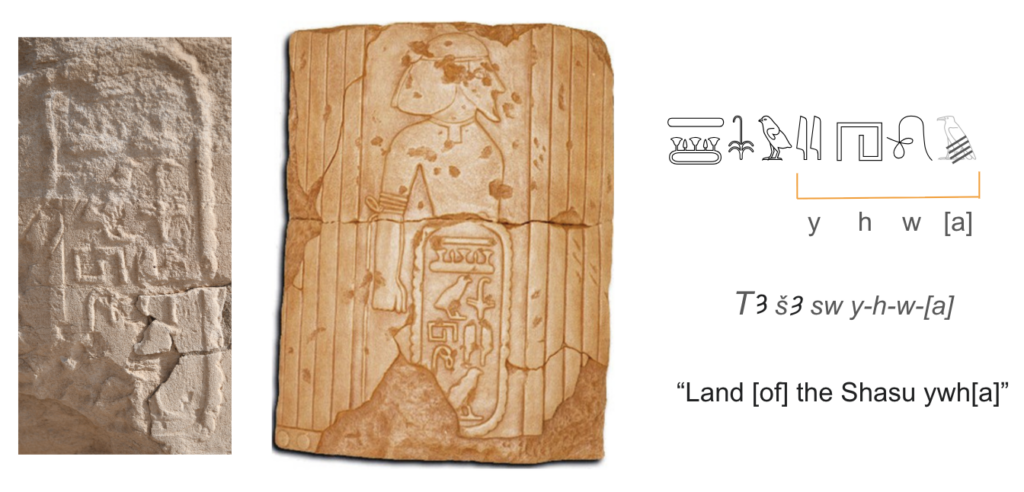
Soleb, Temple of Amun, Hall C, north of the east portal, column N4, topographical list of Pharaoh Amenhotep III (1390–1352 BCE), Doc. 6a, A2: tꜣ šꜣsw yhwꜣ.102 The actual cartouche is shown to the left. A reconstruction of the two column drums comprising the entire document is shown in the center, with the cartouche appearing below a relief depicting a Sashu prisoner. A transcription, transliteration and translation of the inscription is shown to the right.
Amenhotep III, also known as Amenhotep the Magnificent, has to be the luckiest pharaoh in history. Thanks to the martial efforts of his predecessors (Thutmose III, Amenhotep II and Thutmose IV) he inherited an Egypt firmly established as the dominant power in Nubia and the Levant. Which left Amenhotep III, who reigned for nearly forty years (ca. 1386–1349 BCE), with little more to do than spike the football in the endzone. Conquest being unnecessary, he spent his days exchanging gifts, marrying foreign princesses, corresponding with other rulers, supporting the arts (especially sculpture) and building things—lots of things, temples not the least among them. For this he was worshipped as a deity in his lifetime.
He also fathered a son, Amenhotep IV, who got the crazy idea that there was only one god (or anyway, only one worth worshipping, Aten), changed his name to Akhenaten, banned the worship of other gods and banned anyone else but himself from worshipping Aten, among other outrages.
Among the temples Amenhotep III built was one at Soleb in Nubia (present day Sudan) for Amun-Ra, a combination of the hidden creator-god, Amun, and the sun-god, Ra. Amun-Ra was thus the godest of gods in Egypt—which wouldn’t normally attract the attention of scholars interested in another godest of gods, 𐤉𐤄𐤅𐤄, but for a certain relief sculpture on a certain column showing a certain bound prisoner with a very uncertain identification: tꜣ šꜣsw yhwꜣ.
The prisoner so identified was one in a series of captives pictured in carved reliefs on a column, representing groups the Egyptians had subdued. All of them are called šꜣsw, “Shasu,” which comes from the root šꜣs, meaning “traveling” or “wandering,” (so probably nomadic or semi-nomadic groups),103 possibly having a more nasty valence, “lawless malcontents” (cf. the Canaanite and Hebrew šāsâ(h), “to plunder”).104 Each of the figures has distinct physical features and an identifying cartouche.
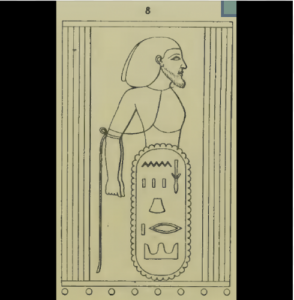
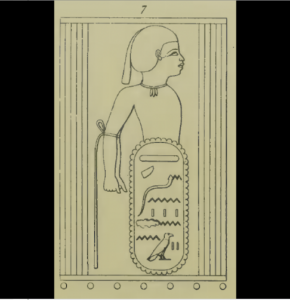
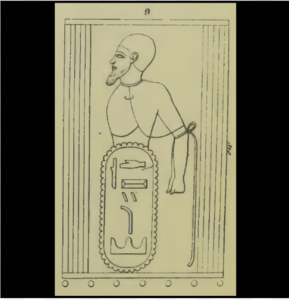
Hall C, column N4, bound prisoners α1, α3 and β1.
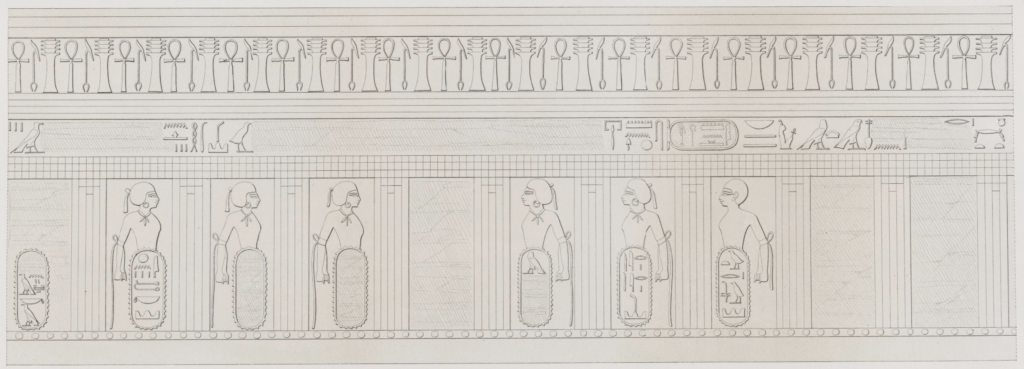
Doorpost b–d, column inscriptions showing bound prisoners.
For all the world, the reliefs seem to want to tell you where these malcontents came from, as suggested by tʒ, “land.” Where things get interesting is in the final glyphs distinguishing one group of Shasu from the others. Thus you have on Column N4:
| Set α: | |
| α1 tʒ šʒśw trbr | Land of the Shasu trbr |
| α2 tʒ šʒśw yhw[ʒ] | Land of the Shasu yhw[a] |
| α3 tʒ šʒśw śmt | Land of the Shasu smt |
| α3 destroyed | (destroyed) |
| Set β: | |
| β1 B-t-‘-n/f[..] | Beth-Anath? |
| β2 destroyed | (destroyed) |
Trbr? Yhw[a]? Smt? Do these designate regions, sacred sites, eponymous ancestors, dieties? Ever sharp-eyed in search of their god’s origin, biblical scholars were quick to notice yhw[ʒ], “yhw[a].” How like 𐤉𐤄𐤅𐤄, and in just the right place: Egypt, the land whence the imprisoned Israelites escaped.
Now, if you’re a biblical archaeologist—which is about as sensible as being a biblical geneticist—you’re likely to be convinced that yhw[ʒ] is 𐤉𐤄𐤅𐤄. And if you’re a lucky biblical archaeologist, you’ll find employment in such esteemed centers of learning as Dallas Theological seminary. So it is with one Titus Kennedy, who sees in Soleb’s yhw[ʒ] the god of his employers:
The uniqueness of this name, its association with a nomadic group east of Egypt, and the contextual and linguistic implications that the name refers to a deity rather than a specific geographic location, suggests that this is an Egyptian rendering of the deity Yahweh, known from other ancient texts as the monotheistic god worshipped by the ancient Israelites.105
The majority of scholars are a bit more circumspect. On purely phonetic grounds, yhwʒ and 𐤉𐤄𐤅𐤄 are plausbly identical. Yet yhw[ʒ] seems to be a geographic designation—perhaps one that came to be associated with a deity?106 Or a designation for a people that later came to be associated with a deity?107 Or a geographic designation and nothing else? Or a group designation and nothing else? Truth be told, to see the name of the biblical 𐤉𐤄𐤅𐤄 in the yhw[ʒ] at Soleb takes a lot of hopeful squinting.
What can be said with confidence is that no evidence exists for 𐤉𐤄𐤅𐤄 as an indigenous deity in second millennium Palestine or Syria.108 The Israelites first encountered in the Merenptah Stele (see compendium entry below) and the yhw[ʒ] of Soleb “had nothing to do with each other.”109
A final wrinkle deserves mention. As noted above, Amenhotep III didn’t do much conquering—only a single excursion in his youth to put down a rebellion in Nubian Kush. So, how to account for the subdued Shasu celebrated in the temple of Amun-Ra? As it turns out, Egyptians (not unlike other ancients) used templates in their artistic endeavors. How else, for instance, would a sculptor in Elephantine (way south) know how to hammer out the visage of a pharaoh enthroned in Memphis (way north)? It is likely that the templates used for the Soleb reliefs were from one of Amenhotep III’s predecessors, perhaps from Thutmose III (who conducted something like 16 campaigns, all successful, conquering much of the Near East) or even Thutmose I110 (whose campaigns extended Egypt’s domains in the Levant and Nubia farther than ever before)—a century or more before the luckiest pharaoh of all.
Egyptian Book of the Dead, Pharaonic Roll 5
(ca. 1330–1230 BCE)
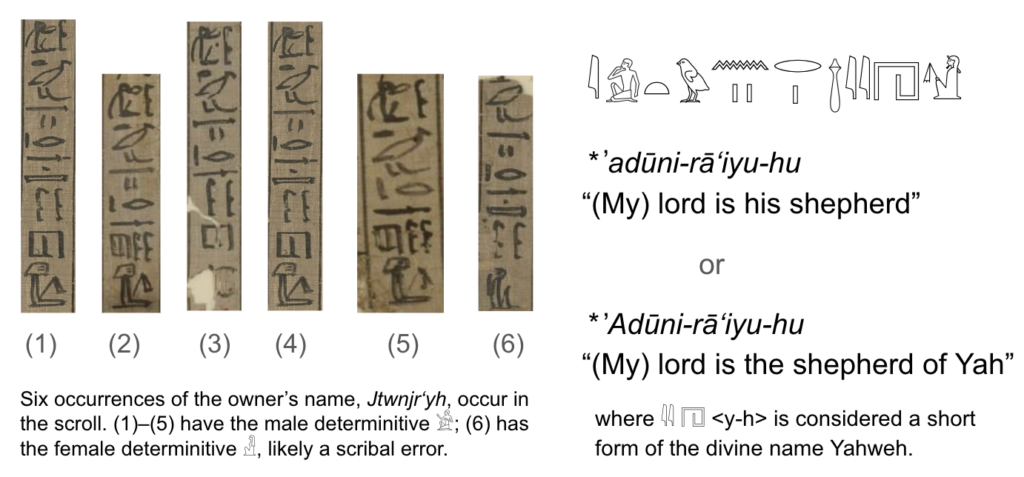
Detail from an Egyptian Book of the Dead (Princeton University Library, Pharaonic Roll 5). The six occurrences of the owner’s name are shown to the left. The transcription follows Adrom and Müller.111 The possible translations are those suggested by Thomas Schneider.112
In 2007 the Egyptologist (and onomastic specialist) Thomas Schneider published an article in which he proposed “what appears to be the first historical evidence of the god [Yahweh].”113 The document was an Egyptian Book of the Dead in the Garrett Collection of the Princeton University Library. It is dated to the late 18th Dynasty or early 19th Dynasty, ca. 1330–1230 BCE, when Canaan was under Egyptian rule. The provenance of the scroll is unknown, but the wider region of Memphis has been suggested as a likely candidate.114
Books of the Dead were commonly prefabricated in funerary workshops, with spaces being left for the name of the deceased to be written in later, as is the case with Pharaonic Roll 5. Uncommonly, the “owner” of this scroll had a non-Egyptian name, Jtwnjr‘yh, likely Northwest Semitic in origin. That was striking at the time of the scroll’s publication (with no known parallels),115 which attracted Schneider’s attention.
Schneider’s starting point was the decades of discussion (and disputation) regarding the putative instances of the divine name (ywh) in the Soleb and ‘Amarah West lists (see compendium entries):
It has become a commonly accepted view both in Egyptology and Biblical Studies that the name of the later god Yahweh—the tetragrammaton YHWH—makes an early appearance in Egyptian topographical lists of the New Kingdom, where it is closely associated with a provenance that is characteristic to statements about Yahweh’s origin in the Old Testament.116
Something of an overstatement—the significance of yhw/yhwa in New Kingdom topographical lists is debated—and something of a surprise, as Schneider is no slouch. To be fair, he quickly noted that yhw in the topographical lists likely designed a cultic place associated with ywh, not ywh himself (thus a toponym rather than a theonym). Which, if that were the case, Schneider’s proposal would be a very big deal indeed, as this would be the first evidence of yhw understood as a deity (at the time the article was published).
To be fairer still, Schneider’s article ends in a question mark (“The First Documented Occurrence of the God Yahweh?”)—but in the article itself he seems more convinced of his discovery. In a scholarly discussion impenetrable to all non-Egyptologists, Schneider proposes two possibilities for the meaning of Jtwnjr‘yh’s name, both nominal sentence names:
- ʾadūnī rāʿiyu-hu, “(My) lord is his shepherd”
- ʾAdōnī rōʿē-Yāh, “My lord is the shepherd of Yah”
The important distinction is that the former is not a theophoric sentence name (unless ʾadūnī / ʾAdōnī is itself a designation of a deity, as some think it is117—in which case you would have a double theophoric nominal sentence name). For Schneider, the latter is a theophoric sentence name, every bit as much as the double theophoric name ‘ēlîyāh, Elijah.
But if Jtwnjr‘yh knew a god named Yāh, what sort of Yāh might it have been? One accommodated to Egyptian rituals and beliefs related to the afterlife, never contemplated in either Ugaritic or Israelite imaginings? A Yāh lacking a glyph of his own, comfortable with Egyptian gods sporting theirs? What kind of Yāh would that be?
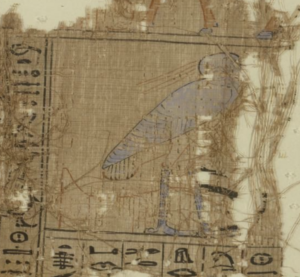
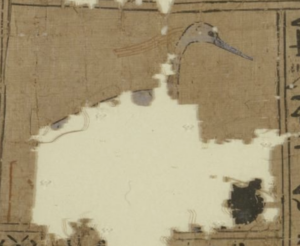
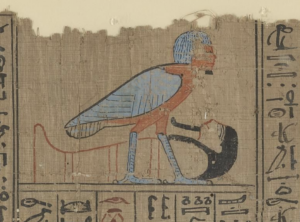
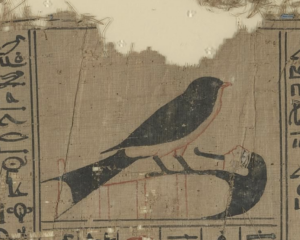
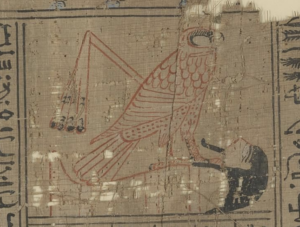
Depictions (“vignettes”) of the animals Jtwnjr‘yh wanted to be transformed into in the afterlife. The “transformative” spells accomplishing the transformation appear in hieroglyphics below the vignettes.
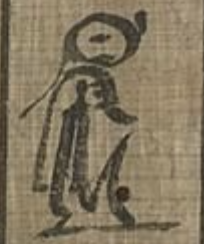
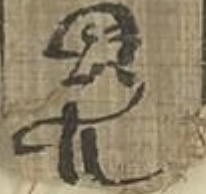
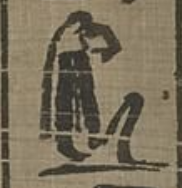
A selection of Egyptian gods invoked in Pharonic Roll 5.
It must be a disappointment to Schneider that his discovery was not the thunderclap he might have hoped. Recent surveys by biblical scholars searching for extra-biblical evidence for the divine name mention the proposal in passing and move quickly on, without critical commentary.118 Egyptologists (as distinct from biblical scholars) are more critical, seeing in Schneider’s god nothing more than a toponym119 or calling his conclusions methodologically dubious.120
Temple of ‘Amarah-West
Ramesses II (ca. 1279–1213)
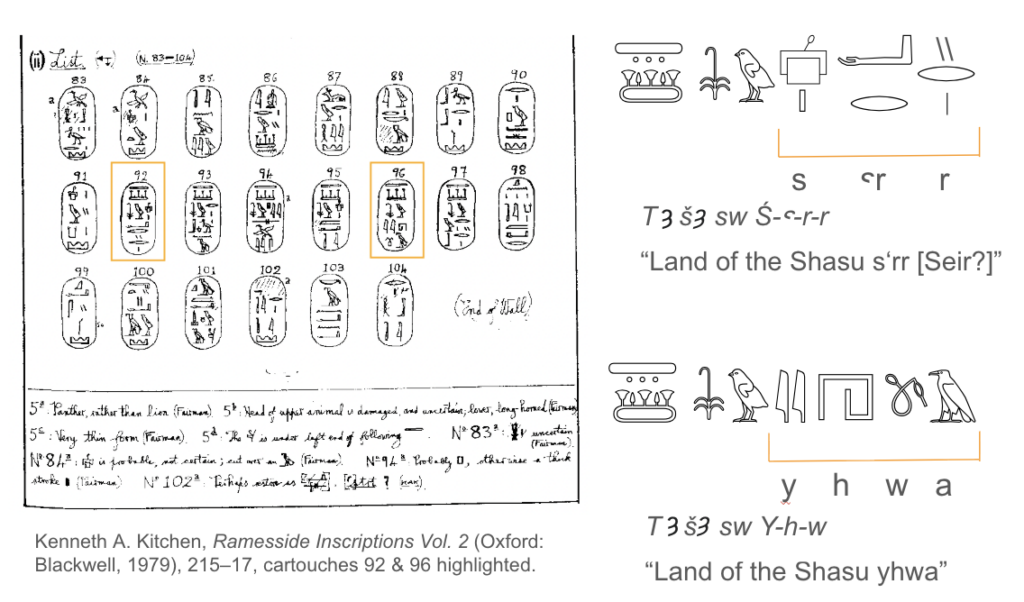
Temple of ‘Amarah-West, Ramesses II, hypostyle hall, northern wall; topographical list naming northern enemies and place names. Kenneth Kitchen’s drawings of the cartouches are shown to the left. The transcriptions follow Adrom and Müller.121 Translations follow Shalomi-Hen.122
About 50 kilometers north of Soleb was another temple, this one built by a pharaoh that historians have named Ramesses II or Ramesses the Great, to distinguish him from other pharaohs named Ramesses. As it happens, New Kingdom pharaohs had five names, among them a birth name and a throne name. Ramesses II’s birth name was rꜥ-ms-sw mry-imn (Ramesses Meriamun, “Re has begotten him, beloved of Amun”). His throne name—that is, the name he assumed upon taking the crown—was wsr-mꜣꜥt-rꜥ stp.n-rꜥ (Usermaatre-Setepenre, “Powerful is the Maʿat of Re, chosen of Re”). It was the throne name that the first century BCE Greek historian Diodorus Siculus translated in an inscription at the Ramesseum reading: “I am Ozymandias, king of kings; if any one wishes to know what I am and where I lie, let him surpass me in some of my exploits.” Diodorus (a name meaning “Gift of Zeus”) got Ozymandias (Ὀσυμανδύας, Osumandúas) from the first part of Ramesses’s throne name, wsr-mꜣꜥt-rꜥ (Usermaatre). And Percy Shelly got the name for his famous 1817 sonnet from Diodorus—said sonnet a meditation on your evanescence.
Ozymandias was a busy guy. He had over 200 wives and concubines, 96 sons and 60 daughters, most of whom he outlived. Think of it: that’s almost one birthday gift a day to sort out! Somehow he still had time to conduct 15 military campaigns, all successful save one against the Hittites, which resulted in a draw and gave the world its first peace treaty in 1258 BCE. A copy of the Akkadian (Hittite) version of the “Eternal Treaty” appears above the entrance to the Security Council Chamber of the United Nations in New York.
Of present interest is a list of northern peoples and place names along the base panels of the hypostyle hall of Ozymandias’s temple at ‘Amarah West. The Shasu nomads of Soleb reappear (unpictured) at ‘Amarah West and, like at Soleb, they are identified in cartouches. Though the site was excavated by the Egypt Exploration Fund in 1938–1939 and again between 1947 and 1950, no formal epigraphic publication has been forthcoming, leaving only Kenneth A. Kitchen’s handwritten copies for examination (pictured above).
What was immediately apparent to archaeologists was that the ‘Amarah West list duplicates, inverts and adds to the Soleb list. The additions include tʒ šʒśw rbn, “Land of the Shasu rbn” and—at the top of the list— tʒ šʒśw ś‘rr, “Land of the Shasu ś‘rr” (see table below).
| Soleb Column N4 inscription (Set α) | ‘Amarah West Wall inscription (ll. 93–89) |
| tʒ šʒśw trbr – “Land of the Shasu trbr” | tʒ šʒśw ś‘rr – “Land of the Shasu sꜥrr” |
| tʒ šʒśw yhw[ʒ] – “Land of the Shasu yhw[a]” | tʒ šʒśw rbn – “Land of the Shasu rbn” |
| tʒ šʒśw śmt – “Land of the Shasu smt” | tʒ šʒśw pyspʒys – “Land of the Shasu psypys” |
| Soleb isolated block Sb. 79 | tʒ šʒśw śmt – “Land of the Shasu smt” |
| tʒ šʒśw pysp[…] – “Land of the Shasu psyp[ys]” | tʒ šʒśw yhwʒ – “Land of the Shasu yhwa” |
| tʒ šʒśw (t)rbr – “Land of the Shasu trbr” |
So now you have a list including yhwʒ, which is suspiciously similar phonetically to 𐤉𐤄𐤅𐤄, and ś‘rr, which is suspiciously similar phonetically to Seir, whence forth 𐤉𐤄𐤅𐤄 marched, making the earth tremble, the heavens pour water and the mountains quake. What more proof could be needed to establish that the Egyptian lists a) name the god of the Israelites and b) endorses the biblical account of his southern origin?
Except, just as scholarly squinting is required to see 𐤉𐤄𐤅𐤄 in Soleb’s yhw[ʒ], additional squinting is required to see Seir in ‘Amarah West’s ś‘rr. Which is to say, there are technical difficulties. The Egyptians both knew of Seir and how to spell it. They also knew of Shasu hailing from Seir. So you’ll read of Ozymandias himself on a column in Tanis, the “savage wild lion who seized the Shasu and hacked up the mountain of ś-‘-r with his strong arm/sword.” In Great Harris Papyrus (pHarris I 76,9–10) you’ll find, “I [Ramesses III, not one of Ozymandias’s 96 sons] smote the ś-‘-r from the Shasu tribe.”123
You might think that would eliminate all need of squinting: the ‘Amarah West ś-‘-r-r obviously refers to the biblical Seir, a mountain haunt of 𐤉𐤄𐤅𐤄, who is the equally obvious referent of yhw[ʒ]. If that’s your conclusion, you’re not alone; many scholars have this view.124 Some even suggest that tʒ šʒśw ś‘rr, “Land of the Shasu sꜥrr”, appearing at the top of the list, functions as a sort of headline toponym, introducing the Shasu groups below and firmly locating them in Seir-Edom.
The one wee problem is the extra /r/ in ś-‘-r-r, a topic of endless discussion. Not just any extra /r/, but an emphatic one: a combination of a double stroke (//), an /r/ (𓂋) and a stroke (|).The suggestion that it was a slip of the sculptor’s chisel, formally known as dittography, does not obtain.125
And then there’s the problem of reasoning—the circular sort. “Since Yhwh’s origin is, according to the Old Testament, in the Kenite-Edomite area, the ś-‘-r-r of the Amarah-list must be identical with the biblical Sëir. The mention of Sëir on the other hand proves Yhwh’s descent from the southern Palestine area (Edom).”126
Cue the squinting.
Victory Stele of Merneptah
Merneptah (ca. 1213–1207)
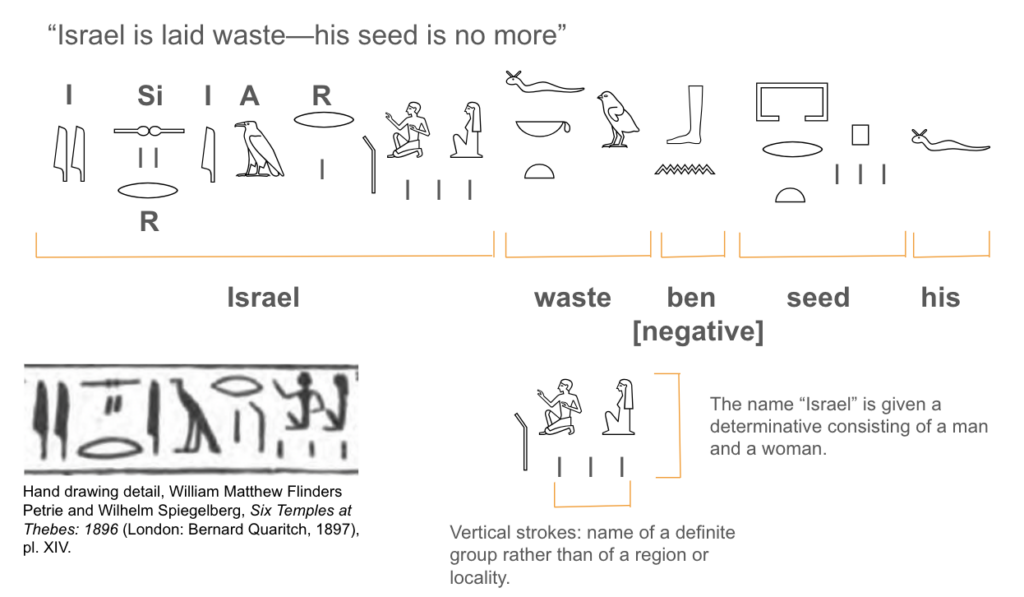
The victory stele of Merneptah, transcription, explanatory notes and translation (corrected to read “his seed” rather than “its seed”) after Thomas Römer, “Yhwh, a God of the Wilderness: A Biblical and Extrabiblical Investigation,” Brown University Program in Judaic Studies, Feb. 24, 2015.
In 1896 William Matthew Flinders Petrie (named for his father, his mother’s maiden name, and his grandfather Captain Matthew Flinders, who led the first circumnavigation of Australia) set out to excavate a temple complex at Thebes (now named Luxor), the ancient Egyptian capital. With the aid of 200 Egyptian workmen, Petrie began to clear the area to the south of the Ramesseum, a mortuary temple of Ramesses II, where New Kingdom pharaohs had built temples for their own mortuary cults. There Petrie discovered the temple of Merenptah Hotephermaat (“Beloved of Ptah, satisfied/pleased with Maʿat”), Ramesses II’s son and successor. In its ruins was a statue of the one both beloved and satisfied. Having been raised in a good Plymouth Brethern home, Petrie immediately recognized the value of the statue. Even though the artefact itself would be claimed by the Giza Museum, a photograph would be sufficient to generate considerable interest (and presumably funds) in England: Ramesses II was believed to be the pharaoh of the Oppression, thus his successor must be the pharaoh of the Exodus.
That alone would have been find enough, but Petrie must have been beloved of Ptah, as his fortunes were only to improve. He subsequently unearthed a stele, 10 feet in height, made of black granite and covered with inscriptions. One side, the original text, bragged of Amenhotep III’s architectural exploits. But just as Merenpath had repurposed the stones of Amenhotep III’s mortuary temple to build his own (including smashing statues to use as fill), he filled the reverse of the stela with inscriptions describing his conquest of the Lybians and Sea Peoples. Petrie asked the German philologist Wilhelm Spiegelberg, who happened to be in the neighborhood, to translate Merneptah’s inscription. The young philologist was puzzled by a name appearing near the end of the text. As Petrie remembered it, “[Spiegelberg] lay there copying for an afternoon, and came out saying, ‘there are names of various Syrian towns, and one which I do not know, Isirar.’ ‘Why, that is Israel,’ said I. ‘So it is, and won’t the reverends be pleased,” was his reply.’”127
So was found the Victory Stele of Merneptah, also named the “Israel Stele.” The overwhelming consensus by those who spend their lives on such matters is that the stele does indeed name Israel—which is where agreement ends.
Interesting as Merneptah’s conquest of the Lybians and their allies may be (the subject of the first 25 lines of the stele), it was the last section that caused (and continues to cause) a stir, as it is the first extra-biblical evidence of Israel, preceding the next by about 350 years.128 The last three lines read as follows:
All the rulers are prostrate, saying “Peace!” Not one among the Nine Bows dare raise his head. Plundered is Libya (Tehenu), Hatti is at peace, carried off is Canaan with every evil. Brought away is Ascalon, taken is Gezer, Yeno‘am is reduced to non-existence. Israel is spoiled, his seed is not, Khurru has become widowed because of Nile-land. All lands together are (now) at peace, and everyone who roamed about has been subdued, by the King of S & N Egypt, Baienre Meriamun [Merneptah’s throne name], Son of Re, Merenptah, given life like Re daily.129
The inscription appears as running text, suggesting a prosaic narrative. That understanding was challenged in 1985, when two Old Testament scholars from the University of Chicago identified the last three lines as “coda section” with a discernable “ring pattern.”130 That opened the literary-critical dam, producing a flood of chiastic proposals, none yet finding canonical status.131 The great thing about literary-critical analysis is that structure is largely in the eye of the beholder, and as sure as day follows night, meaning follows structure. To give just two examples of the many chiastic proposals on offer:
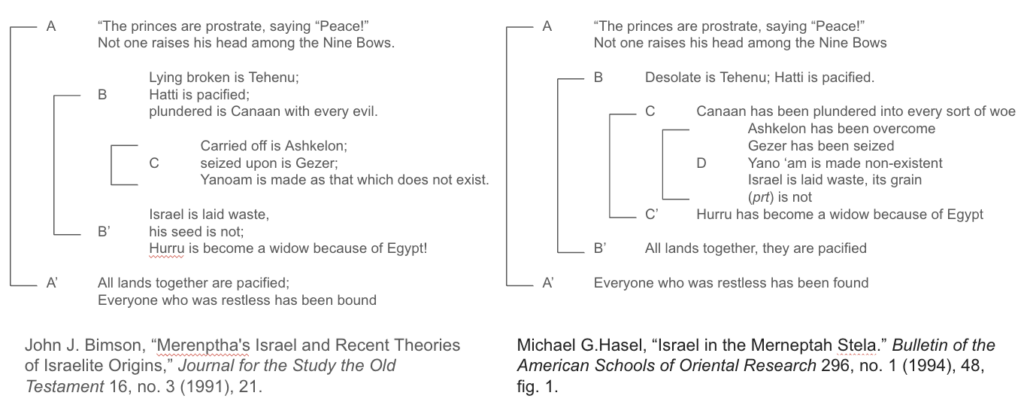
You can imagine Israel as properly placed at the upper chiastic level (B) of Tehenu (Libya), Hatti (Asia Minor and northern Syria) and Canaan (southern Syria and the Palestinian coastal plain), paired with Hurru (the entirety of Syria-Palestine) and thus “a geographically extensive tribal coalition with a considerable significance in Egyptian eyes.”132 Israel, in this view, was a well-established group in Merneptah’s time, not newly arrived or just emerging as an identifiable people, on a par with major regional powers (chaistic example left above).
Or, you can imagine Israel at a lower chiastic level (D), grouped with the city-states Ashkelon, Gezer and Yanoam. That would imply that Israel, while not a city-state, was a “socio-ethnic [group] in the late 13th century B.C., one that is significant enough to be included in the military campaign against political powers in Canaan.”133 In this view, Israel was on a par with urban centers posing a threat to Egypt’s hegemony (chiastic example right above).
Critical to the discussion is the way Israel is expressed on the stele, as that gives fits to the various interpretations, including those of a chiastic variety. All of the other toponyms listed have the determinatives (semantic classifiers) indicating a foreign city-state/land/region: the throw-stick (𓌙) and the three-hills-foreign–land signs (𓈊). Israel, in contrast, has determinatives indicating a foreign (𓌙) people (𓀂𓁐) as a collective (| | |) but lacking a distinct land (𓈊); it is an ethnonym. Some scholars suggest that may have been a scribal error,134 while others are convinced that the scribe set Israel apart as “unique and distinct.”135
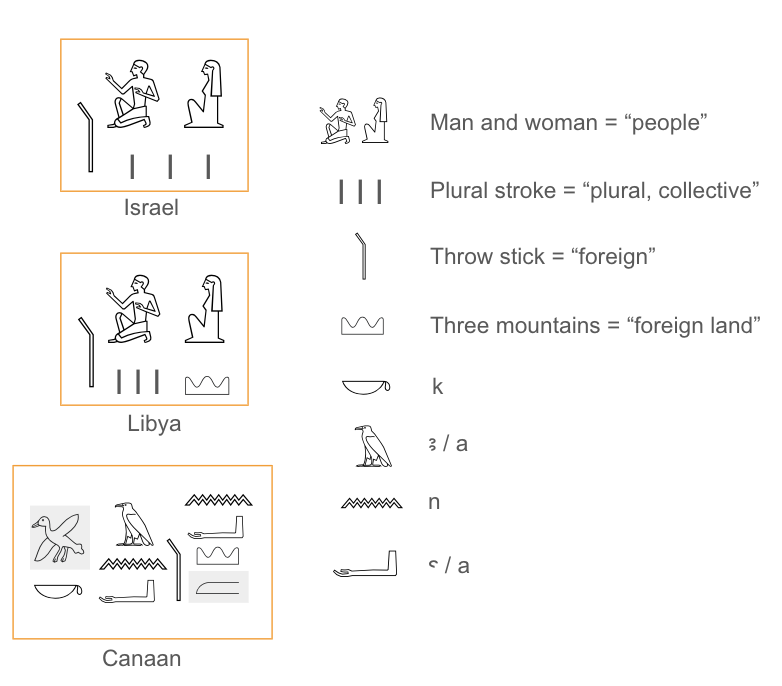
But distinct how? Typically neglected by literary types erecting chiastic castles is the phrase “everyone who roamed about (šmʒ) has been subdued.” If Israel—the only entity lacking a toponymic determinative—was doing the roaming, a nomadic group would seem to be implied, reminiscent of the Shasu nomads of Soleb and ‘Amarah West. Which would seem to collapse attempts to see the Israel named in the stele as a major regional player—at any chiastic level. But then, why mention it at all?
And then there’s the matter of the word “seed” (prt.f). As in holy writ, “seed” in Egyptian hieroglyhs can mean “grain” or “semen/progeny.” The scribe could have been of help, scribling the sign for grain (𓇠) or phallus-with-emission (𓂺) to specify, but no such luck. As the Egyptians were known both for destroying wheat fields of defeated peoples and for cutting off the penises of the dead bodies of enemy soldiers,136 either interpretation is possible.
Another question is, whether grain or emission, whose seed was it? Egyptians referred to foreign cities, regions and countries as feminine, but added to the prt “seed” is the masculine singular /f/. Thus, it is “his seed is not,” not “its seed is not,” as it is often mistranslated.137 This may be pregnant with meaning (see below), or it may just be the charming pairing of the emasculated masculine Israel with the widowed feminine Khurru (identified as feminine by the final /t/ in ḫ3rw ḫpr ḫ3rt) by a scribe of some rhetorical sophistication. Poetic couplets were stock-in-trade among the Egyptian literati.138
If you convince yourself that “grain” is the obvious interpretation, you can then imagine Israel as a sedentary people, living in rural settlements, practicing agriculture and possibly animal husbandry. You can almost see their tents.139 No roaming about for them. If, on the other hand, you opt for the more risqué option, you can imagine a scribe having a such command of his subject matter as to offer an extraordinary insight:
As suggested earlier, the use of the masculine pronoun .f to refer back to the collective noun Israel may indicate keen observation by the Egyptian annalist, denoting an awareness that Israel traced origins to an eponymous ancestor.140
And who would that be? As it goes in scholarship of this sort, one scholar’s “may” becomes another’s “likely,” allowing further specification:
Given the likelihood that the pronoun in prt.f “his seed” refers to Israel’s eponymous ancestor and that the noun in that phrase denotes progeny, it is reasonable to conclude that the whole phrase denotes the progeny of Israel-Jacob. In other words, prt.f may be compared to the biblical expression זֶרַע יִשְׂרָאֵל “Israel’s seed,” whose meaning is made reasonably clear by its use in poetic parallelism with זֶרַע יַעֲקֹב “Jacob’s seed” (in Ps. 22:24) and with בְּנֵי יַעֲקֹב “Jacob’s children” (in 1 Chron. 16:13).141
“Jacob-Israel”—he whose wives credit 𐤉𐤄𐤅𐤄 for the birth of sons (see HaShem: part 1). Which, if that’s the game to be played, might allow you to imagine 𐤉𐤄𐤅𐤄, unnamed, haunting Merneptah’s stele like Casper at Whipstaff Manor.
Whoever Israel in the stele may have been, however they may have lived, whatever they may have imagined their origins to be, one attribute can be assigned to them with a high degree of confidence: illiteracy. The first alphabetic writing system, proto-cuneiform, is known from Mesopotamia at the end of the fourth millennium BCE (ca. 3200 BCE), followed a century later by Egyptian hieroglyphic (ca. 3100 BCE)142—the world-changing innovation of the Chalcolithic Age. It was not until the 10th–11th centuries, Iron Age I/IIA (skipping the Bronze age altogether), that writing appeared in Phoenicia, spreading from there to Syro-Palestine in the 9th century. As for Israel and Judah, no pre-9th century inscription has been found.143 Which puts something of a dent in comparing the stele’s “his seed,” inscribed in the late 13th century, to “Jacob’s seed,” written at the earliest 250 years later. And if you need to imagine Moses writing the Pentateuch, you would do best to look for hieroglyphic texts.
In Petrie’s day, two “facts” were widely accepted about the Exodus. First, the Egyptian city where the Israelites were enslaved was the “Rameses” of Exodus 1:11, corresponding to the archaeological site of Pi-Ramesses, the new capital of Egypt built by Ramesses II in the Nile Delta and excavated by Petrie himself in 1884. Ramesses II was thus the pharaoh of the Oppression. Second, the Israelites escaped captivity during the reign of Merneptah. This was first proposed by the Flemish cartographer Gerardus Mercator in 1569 and endorsed by German Egyptologist Richard Lepsius in 1849. Using the 3rd-century BCE chronology found in Manetho’s Aegyptiaca, Lepsius noted that the traditional Jewish date of the Exodus, 2448 after Creation, “corresponds with the year 1314, and therefore, according to the Manethonic chronology, occurs in the time of King Menephthes.”144 Petrie’s discovery of a stele naming Israel in the reign of the pharaoh of the Exodus (Merneptah) was a remarkable confirmation of things already known.
Petrie guessed that his discovery would be the most famous of his finds. In that he was correct. But the stele also posed a problem: if Merneptah, the pharaoh of the Exodus, defeated Israel in Canaan in the fifth year of his reign (Petrie’s reading of the text) the biblical math didn’t work. The Israelites wandered in the wilderness for 40 years before entering Canaan—they should have arrived decades later than Merneptah’s fifth year. In sum, placing Israel in Canaan, the promised land, made Merneptah-as-Exodus-pharaoh and the forty-year-wilderness-period mutually exclusive.
A solution was proposed by the biblical scholar Harold M. Wiener in 1916 and recently revived by Richard C. Steiner of Yeshiva University. In a dense, 74-page contribution to a multi-authored volume published by the Institute for the Study of Ancient Cultures at the University of Chicago in 2024, Steiner presented part one of what is promised to be a two-part elaboration of Wiener’s solution.
To set the stage, it should be noted that the biblical texts know nothing of Merneptah. In fact, it knows nothing of Egyptian activity in Canaan before the 10th century. So you’ll read in 1 Kings 14:25, “In the fifth year of King Rehoboam, King Shishak [Shoshenq I, ca. 943–922 BCE] of Egypt came up against Jerusalem.” But Wiener noticed that there is a biblical defeat of Israel in the right general setting, delivered by the “Amalekites and the Canaanites who lived in that hill country” (Num 14:44–45; Deut 1:44 names the Amorites), not the Egyptians. Steiner’s elaboration suggests that the Amalekites and Canaanites could be descendents of the Shasu warriors defeated by Seti I earlier in the 13th century, now pressed into service as a local militia acting on Egypt’s orders. Merneptah never directly encountered Israel; he was just taking credit for his militia’s work. Thus, the Merneptah stele’s “Israel is spoiled” refers not to Israel’s later conquest of or settlement in Canaan, but to the failed Israelite advance from Kadesh-Barnea (the southern border of Israel) toward Hormah (in the north) on the Negev trail.
Steiner proposes the following chronology:
If the Israelites left Egypt early in the spring of 1212 BCE in the second half of Merenptah’s year 1, they could have sent scouts from Kadesh-barnea late in the spring (Num. 13:20) of 1211 BCE, in the second half of Merenptah’s year 2. And if so, a defeat on the trail to Hormah around seven weeks later (cf. Num. 13:25) would have taken place in the summer of 1211, around the end of Merenptah’s year 2. Finally, a crossing of the Jordan into Canaan after forty years in the desert would have taken place early in the spring (Josh. 4:19, 5:10–11) of 1172 BCE.145
Why is that important? Because, as Petrie noted, Israel’s conquest of Canaan should occur only after Egypt’s last campaigns in Asia. Steiner’s chronology dates Israel’s entry into the promised land after Ramesses III’s Levantine campaign of ca. 1180–1177—the last Ramesside campaign in Palestine. Perfect!
And what were the Israel-people doing between their defeat at the hands of the Egyptian-backed Amalekite/Canaanite Shasu militia? Roaming about, of course, just as Merneptah’s stele can be read to suggest (“everyone who roamed about has been subdued”).
And there you have it. Ramesses II was the pharaoh of the Oppression, and Merneptah was the pharaoh of the Exodus, just as everyone had known for so long. The biblical math subdued, the skeptics widowed, the historicity of the Pentateuch now at peace.
Harold M. Wiener, English by birth, moved to Palestine in 1924 and spent his time there seeking reconciliation between Arabs and Jews. He supported an Arab school and funded scholarships for young Arabs. Wiener was murdered by an “Arab gang” in 1929. His last words were ana yahud, “I am a Jew.”146
Mesha Stele
Ca. 840–810 BCE
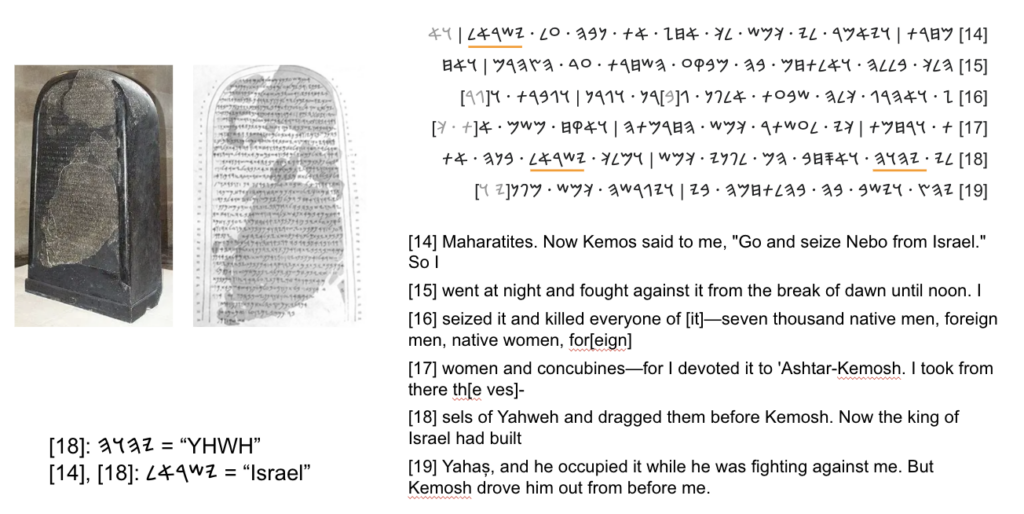
The Mesha Stele (Louvre Museum, accession number AO 5066), discovered at the site of ancient Dibon (modern Dhiban, Jordan). The stele as displayed in the Louvre (left), facsimile with existing fragments shaded (center), transcription and translation (right). Translation by Kent P. Jackson.147
If ever the Encyclopedia of Fraught Rocks were to be written, the Mesha Stele would receive a prominent entry. It was discovered in August 1868 by the Reverend Frederick Augustus Klein, a missionary serving the Anglican Church Missionary Society in Jerusalem (CMS). That alone is strange, as Klein was born in Strausbourg, a German-speaking region of France, educated in Switzerland but ordained in the Church of England. He represented in a human body the three European powers circling Palesting like vultures, awaiting the death of that “sick man of Europe,”148 the Ottoman Empire.
Klein described his efforts in Palestine in an annual report of the CMS:
Our Mission was originally founded with the object of evangelizing the Mohammedans, and as this could not be done directly owing to the want of religious liberty in Turkey, it has been our endeavour to reach them through the Christians, by placing before them, in connexion with our Native Protestant congregations, the pure Christianity of the Gospel in distinction from the paganized Christianity of the Oriental Churches, Greek, Latin, Armenian, Coptic, Greek Catholic, &c.149
While on his rounds among the Christian villages near Dhiban in what is now Jordan, he visited the encampment of the Bani-Hamdeh bedouin clan, with whom he had friendly relations. The sheikh of the tribe, Ahmad ibn Tarif, was eager to show the reverend a mysterious black stone. Why? Because the bedouins were no dopes. They knew how obsessed the Christian infidels had become in ancient artefacts—and where obsession is found, money is to be made. What the bedouins probably didn’t know (and wouldn’t have cared about if they did) was that the infidels’ faith had lately come under attack by German apostates who dared to cast a critical eye on biblical texts (the so-called “higher critics”). They even suggested that the Pentateuch couldn’t possibly have been written by Moses!
The quest to rebut those blasphemous claims with material evidence proving the historicity of the Bible emerged in the 19th century. Thus was born “biblical archaeology.”
But the quest had another goal, one not so much aligned as intertwined with the political ambitions of European powers. It was rooted in a deeply held belief that Christians—not Jews and certainly not Muslims—were the proper inheritors of the Holy Land, the place where Jesus had walked, performed miracles, said all manner of things, was crucified and raised. The place given to a race chosen by 𐤉𐤄𐤅𐤄 and then to gentiles by St. Paul.
At a meeting to establish the Palestine Exploration Fund in 1865, the Archbishop of York proclaimed:
This country of Palestine belongs to you and to me, it is essentially ours. It was given to the Father of Israel in the words: ‘Walk the land in the length of it and in the breadth of it, for I will give it unto thee.’ We mean to walk through Palestine in the length and in the breadth of it, because that land has been given unto us. It is the land from which comes news of our Redemption. It is the land towards which we turn as the foundation of all our hopes; it is the land to which we may look with as true a patriotism as we do to this dear old England, which we love so much.150
Sheikh Ahmad showed Klein the black stone, which the reverend immediately recognized as a “monument of Hebrew antiquity.”151 It was sunset and the light was fading, so Klein was only able to take measurements, make a sketch and copy a few letters of the inscription. The stone as Klein measured it was just over a meter high, 70cm wide and 35cm thick. Its surface was smooth and, except for the upper two or three lines, “was in a perfect state of preservation.”152
When he returned to Jerusalem, Klein showed his notes to Heinrich Petermann, a linguist and representative of the North German Federation in Jerusalem—not the French consul (of his nationality) or the British consul (of his employment). Petermann recognized the letters in Klein’s notes as Phoenician. If the entire face of the stone were covered with script, as Klein maintained, it would be the most important artifact ever found in the Holy Land, as no extensive inscription dating to biblical times had yet been found.
Word of Klien’s discovery leaked, setting in motion an international intrigue worthy of a John le Carré mystery. Prussia, France and Britain (late and to a lesser extent) scrambled to out-maneuver each other to acquire the stone, enlisting in the effort bedouin clans who had no love for each other. Petermann, in a stroke of genius, dragged the Ottoman government in, making a big mess bigger still; the Bani-Hamdeh hated their Turkish overlords. Charles Clermont-Ganneau, an orientalist assigned to the French consulate in Jerusalem, had his own stroke of genius. He dispatched agents from the Awad bedouin clan—bitter enemies of the Bani-Hamdeh—to make a paper squeeze (a wet-paper impression) of the inscription. They succeeded, but at the cost of a nasty fight; some reports say that several Bani-Hamdeh were killed. The Awad agents managed to jump on their horses and escape, one having received a spear wound for his efforts. The squeeze they ultimately delivered to Clermont-Ganneau had to be torn from the stone before it was dried, leaving it in tatters.
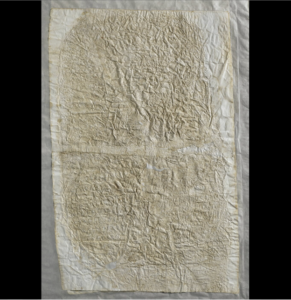
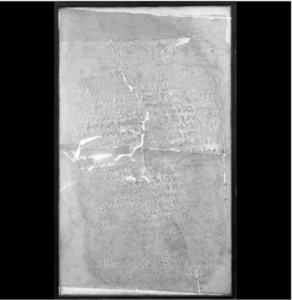
Squeeze of the Mesha Stele, Louvre Museum (AO 5019). Color reflected-light documentary photograph (left), color raking-light photograph (center), black-and-white transmitted-light photograph (right).
The bidding war, combined with the intervention of Ottoman authorities, infuriated the Bani-Hamdeh clan. In 1869, they heated the stele in a fire and doused it with cold water, shattering it into dozens of pieces, which were then distributed among various families as talismans to prevent their crops from succumbing to blight.153 Klein, Petermann, Clermont-Ganneau and others spent decades disputing in print details of the misadventure, bad blood resulting from a colonial drama that might be considered a farce if the ideological stakes were not so high.154
So if you’ve ever wondered how today seven million chosen people and another seven million unchosen living in an intemperate land can make such a mess of the world, it’s not entirely their fault.
The inscription now displayed in the Louvre comprises fragments acquired over time and restoration of the lost portions based on Clermont-Ganneau’s squeeze. The stone is dated to the 9th century on paleographic grounds; the script is Hebrew but the language Moabite.155 A tighter date of ca. 840 BCE is often given based on biblical chronology, but some argue for a later date, perhaps as late as 810 BCE.156
The Louvre’s plaster reproduction of the stele is a confection, apparently based on a square-bottomed reconstruction sketch made by Captain Charles Warren. Capt. Warren was a British officer of the Royal Engineers stationed in Jerusalem and tasked with archaeological excavations in Palestine, in particular on the Temple Mount. Though involved in collecting fragments of the shattered stone, Warren never saw the complete stele. Klein, the only European to have seen the stone intact, maintained to his death that it was rounded top and bottom.157
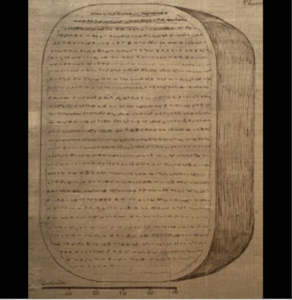
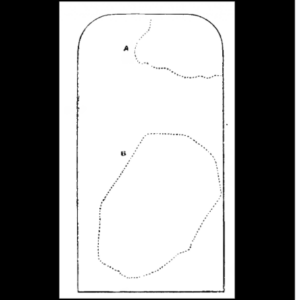
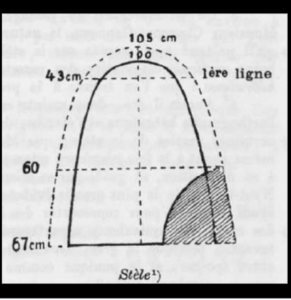
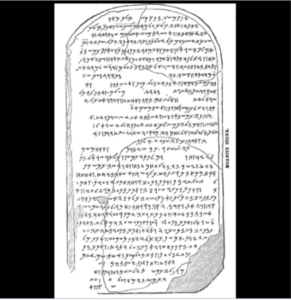
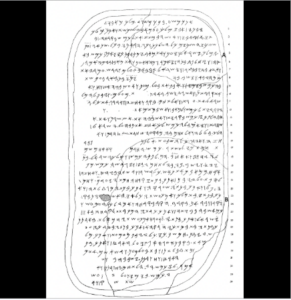
King Mesha tells a tale that has striking parallels to 2 Kings 3:4–27, though the endings couldn’t be more different. In the stone, Moab had been subjugated by Omri and his son (presumably Ahab), until Mesha liberated the kingdom with the help of his trusty god Chemosh. In 2 Kings, it is Omri’s grandson, Jehoram, who made an alliance with the kings of Judah and Edom to defeat Mesha with the help of their trusty god 𐤉𐤄𐤅𐤄—who considered his assistance “a trifle.”
The stone has been hailed as “the greatest Biblical discovery of modern times”158 and a material rebuttal of skeptics. In 1878, an “authorized lecturer to the Palestine Exploration Fund,” James King, wrote a treatise on “Moab’s Patriarchial Stone.” The final chapter was entitled, “The Bible Vindicated by the Letters, History, Geography, and Teaching of the Stone.” In it King proclaimed:
The stone, therefore, like a venerable prophet, vindicates the Word of God, and puts to flight the army of cavillers [mockers]; it testifies to the antiquity and claims of the grand Old Book which captious disputants and would-be philosophers had dared to impugn.159
And indeed, the stone has a lot of words that might support such a conclusion. Israel is mentioned no less than five times. The Moabite king himself, Mêšaˁ, is the same king to be found in 2 Kings 3:4. Seventeen places are named, fourteen of which are to be found in the Bible in exactly the same form. Not to forget 𐤉𐤄𐤅𐤄, who appears in all of its tetragrammatic glory, not in the shortened forms Yh or Yw or Yhw found elsewhere. If authentic, this would be the first mention of the name above all in an extra-biblical source.
A number of scholars—or cavillers, as King would malign them—questioned the authenticity of the stone in the years following its installation in the Louvre, and not without reason. It was discovered in a period when the market for artifiacts from the Holy Land was booming. And markets, like nature, abhor a vacuum, thus giving rise to a vigorous and sophisticated counterfeiting trade. Among the Arabs that Clermont-Ganneau enlisted to acquire the stone was one Salim al-Qari, who was later revealed as a forger of Moabite antiquities. And there were concerns of both the grammatical and statistical variety. The former were largely resolved by inscriptions found in subsequent years. To the latter, what would the odds be of having a single extensive epigraphic text from Moab, one extra-biblical reference to a king of Moab that the bible happens to name and discuss, and fourteen place names apishly following biblical orthography?160 What are the odds of finding the stele in a “perfect state of preservation”? What do they say about things too good to be true? And what of the eighteen instances of entire phrases that seem to mimic biblical passages, often containing the same names and in an eerily similar wording?161 To the skeptics, the stone bore the hallmarks of a skilled forger mining the Bible to fulfill—for a price—the deepest longings of faithful scholars.
William F. Albright, the doyen of biblical archaeology, swept all those concerns aside with an argumentum ex silentio published in 1945. Albright wrote in response to a fellow scholar, A.S. Yehuda, who a year earlier had published an article gently and with some regret concluding that the Mesha stele was a forgery:
As much as I would like to dissipate my doubts as to the genuineness of this monument, because of my faith in archaeology and my inclination to believe in the authenticity of ancient historical documents, I hope that some scholars will approve of my effort to stimulate a revision of the whole question. The atmosphere for such an endeavor seems to be more propitious, now, than at the time when a heated controversy was carried on by passionate supporters and opponents.162
Albright was to disappoint Yehuda’s hopes. In a short, scathing article, Albright accused Yehuda of “an arbitrary parti pris” (bias), alleged that he ignored pertinent epigraphic evidence and claimed that Yehuda’s paper “swarms with inaccuracies.” If those were stunning blows, the coup de grâce was Albright’s assertion that “no inscription of comparable age was then known, and it would, accordingly, have been impossible for the greatest scholar of the day to have divined the true forms of characters in use in the third quarter of the ninth century B. C. E.”163 But how could Albright know that? Maybe the forgers knew more than he knew they knew. So an independent scholar recently argued,164 matching Albright’s argumentum ex silentio with another.
Albright concluded what can fairly be described as an unchristian rant with a pronouncement so weighty that he put it in italics: “The Moabite Stone remains a corner-stone of Semitic epigraphy and Palestinian history.”165
And for the majority of scholars, that settled the matter. Still, given the stone’s purported epigraphic, historical and religious significance—as well as the exceedingly strange circumstances surrounding its discovery—you might think a modern audit might be in order to determine its authenticity. With more time having passed, perhaps Yehuda’s hope could be finally fulfilled? At a minimum it would seem reasonable to question the weight that biblical scholars have heaped upon it. But no. With the discovery of the Tel Dan Stele, which may or may not include a reference to the “House of David,” biblical scholars returned to the Mesha Stele only to busy themselves disputing whether line 31 is to be read as the House of David166 or Balek.167
Forest or trees, take your pick.
Tel Dan Stele
9th century BCE
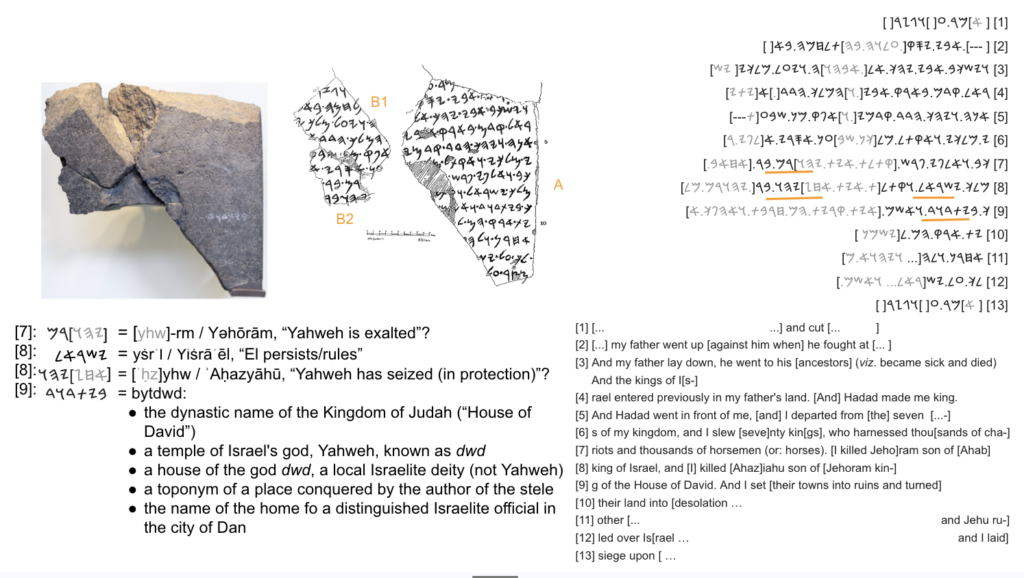
The Tel Dan Stele as displayed at the Israel Museum, Jerusalem (left), facsimile of Fragments B1, B2 and A (center). Facsimile and translation by Avraham Biran and Joseph Naveh.168
You might be surprised to read in 2 Kings 9 that a biblical prophet organized the murder of a king of Israel named for 𐤉𐤄𐤅𐤄, Jehoram (Yəhōrām, “Yeho is exalted”). Could it be that the prophet in question, Elisha (ʼĔlīšāʻ, “My El is salvation”) was named for a different deity—theomachy by proxy? Probably not, as the military commander Elisha recruited to do the deed was named Jehu (Yēhūʾ, “Yah is He”). It would seem that Jehoram, though he removed the sacred stone that his father, Jehoshaphat (Yəhōšafaṭ, “Yahweh has judged”), had set up and dedicated to Baal, let his mother, Jezebel, continue to practice idolatry and witchcraft. Which makes sense, as Jezebel comes from ʾIzevel, which might be an altered form of Baʿlʾizbel “Baal exalts”—which is sure to attract the Lord’s hot anger. However that may be, in a scene worthy of Greek epic, Jehu fired an arrow between Jehroam’s shoulders so hard that it split his sternum and stuck out his chest. Odysseus could do no better to Penelope’s suitors.
Jehu didn’t stop there. He had Jezebel killed and trampled on her corpse. He ordered the murder of all the princes, 70 in total, their heads piled outside the city gate in two piles. And more killings were to come.
If all that bloodlust stirs your moral antennae a bit (and not in a good way), a settling explanation can be found from those better acquainted with 𐤉𐤄𐤅𐤄’s mysterious ways than you:
Under the Mosaic covenant, Israel’s kings were guardians of exclusive Yahweh-worship (Deuteronomy 17:18-20). Persistent idolatry invoked covenant curses (Deuteronomy 28; Leviticus 26). Ahab’s line had become a national fountainhead of apostasy, human sacrifice (cf. 2 Kings 16:3 for later parallels), and judicial murder (Naboth). Thus Joram stood under legal verdict. God’s holiness demanded satisfaction; His patience (1 Kings 21:27-29) had reached its appointed limit.169
Feel better?
The tale in 2 Kings 9 is told from a different perspective in the fragments of a monumental victory inscription of the sort ancient kings were fond. The fragments were found in a controlled excavation of Tel Dan in the years 1993–1994. Dan was an ancient city named for the tribe that controlled it, located in upper Galilee, the northernmost city of the Kingdom of Israel. It was one the two places where Jeroboam I built a temple housing golden calves (the other being Bethel), which did not make 𐤉𐤄𐤅𐤄 at all happy. In Jeroboam’s case, 𐤉𐤄𐤅𐤄’s hot anger was to take the form of incinerating the idolatrous monarch under a pile of burning priests’ bones. Or something like that—the verdict given in 1 Kings 13:2 is a little hard to visualize.
The precise tale told in the Tel Dan stele depends on whether you think the fragments belong to the same inscription, and even if you do, how you put them together. Over such matters passions ignite:
The Tel Dan Inscription produced one of the biggest divides in the scholarly community. In the attempt to defend certain perspectives, the integrity of the investigative process was too often compromised, as was decorum sometimes foregone.170
To a sampling of decorum foregone:
- “I have to say that Biblical “maximalists” are pretty shameless in wanting to ‘have their cake and eat it too,’ where Biblical parallels to archaeological evidence are concerned!”171
- “The recent discovery at Tel Dan of a ninth-century B.C.E. inscription—the first extra-biblical reference to the House of David—is causing extraordinary contortions among scholars who have maintained that the Bible’s history of the early Israelite monarchy is simply fiction.”172
- “Rainey’s language is untruthful and approaches the libellous.”173
- “Davies’s objections are those of an amateur standing on the sidelines of epigraphic scholarship.”174
What, you might ask, is all the ruckus about? Academics often have hot disputes, even in fields you might think more austere, like physics. But when it comes to tradition, to identity, to the right to claim a homeland—to that touchiest of all subjects, sacred texts—the fires burn hotter than those 𐤉𐤄𐤅𐤄 promised Jeroboam. The Tel Dan stele is a pyre built of flammable issues.
The problems start with the name, “Tel Dan stele.” Not the “Tel Dan” part. In 1976 a bilingual inscription was discovered. It read, in Greek and Aramaic, “To the god, the god at Dan, Zolius (gives this) votive tablet.”175 The inscription was late in Tel Dan’s history (2nd century BCE; the site’s earliest strata dates to the 12th century BCE), but not too late to give the tell its name. No, it’s the “stele” part that’s a problem.
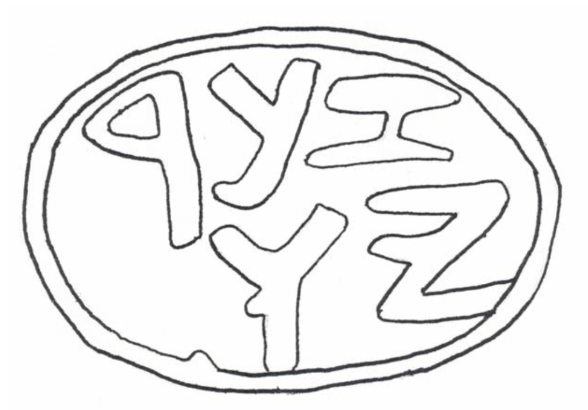
Excavations began in 1966 by the Nelson Glueck School of Biblical Archaeology of the Hebrew Union College–Jewish Institute of Religion and were interesting enough in their way, though not so much in the way of inscriptions. A few were found, brief and mostly pedestrian. Except maybe one, a jar-handle seal impression naming its owner, Zecharyaw (Zechariah, “Yah remembers”). Dated paleographically to the 8th century BCE, could the jar have belonged to Zechariah, the 8th century king of Israel? Maybe, but not likely. Zechariah was a common name in those days.176
Things changed in 1993 when a fragment of the aforementioned monumental inscription was found in the remains of a wall near the city gate (Fragment A). The following year, two more inscribed fragments were discovered at different locations (Fragments B1 and B2), one in a wall and the second used as pavement. All three fragments were made of basalt and had Old Aramaic inscriptions with words separated by dots. The excavators, Avraham Biran and Joseph Naveh, identified the three fragments as belonging to the same stele, dated to sometime before Tiglath-pileser III’s conquest of northern Israel in 733–732 BCE. More importantly, they interpreted six letters in Fragment A—not separated by a dot (𐤁𐤉𐤕𐤃𐤅𐤃, bytdwd; cf. biblical byt.dwd)—as two words (byt dwd) giving the reading “House of David.”
That was the match that set the pyre aflame. The discovery has been called “epoch-making,”177 “one of the most important discoveries ever made in Levantine archaeology,”178 one that would “change forever the nature of the debate” on the existence of David and Solomon.179 It “easily establishes the importance of Israel and Judah on the international scene at this time [9th century]—no doubt to the chagrin of those modern scholars who maintain that nothing in the Bible before the Babylonian exile can lay claim to any historical accuracy.”180
To summarize a firefight that continues to this day, no consensus has been reached on the troublesome bytdwd. It could refer to the Davidic dynasty, which would suggest a historical David, with Solomon thrown in for good measure, despite the lack of unambiguous archaeological evidence beyond the (disputed) inscriptional variety. That is the position taken by a doyen of Levantine archaeology, Israel Finkelstein, who co-authored a book with the notable subtitle, Archaeology’s New Vision of Ancient Israel and the Origin of Its Sacred Texts.181 Or it could name the house of a local deity named 𐤃𐤅𐤃 (Dōd, thus “Beth [of the god] Dwd”)—not 𐤉𐤄𐤅𐤄, an altogether different god.182 Or, maybe it’s not a god at all, but a high-ranking official.183 Or, you could get really creative and imagine bytdwd as a toponym analogous to Bethel (BēṯʾĒl, “House of El”), with dwd understood as a divine epithet, “beloved,” possibly referring to 𐤉𐤄𐤅𐤄: “House of the Beloved” [dwd = 𐤉𐤄𐤅𐤄].184 Which, you know, why not? Throw Dwd into the Coq au Vin whose ingredients already include El, Elohim, YWHW, Adonai, El Roi, Abhir, Kadosh and so on. (The full recipe can be found at Bible Facts Press.) If you have a bit of Hebrew—or, lacking that, a fixed opinion regarding your “sacred texts”—knock yourself out.185
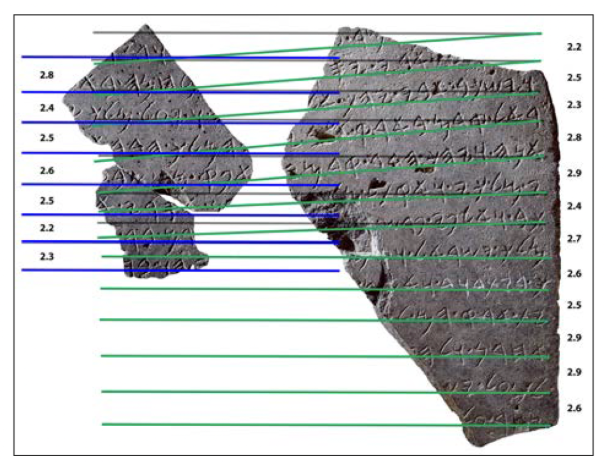
Then there’s the issue of the fragments, which may or may not belong together, which goes to the problem of the name of the thing: “Tel Dan stele,” singular. Pretty much everyone agrees that Fragments B1 and B2 fit together, but do they fit together with Fragment A? As you might imagine, opinions vary. Biran and Naveh in the Editio Princeps place the B fragments beside the A fragment, aligned at the top and with just a bit of space between them, resulting in “a more or less meaningful text.”186 Except, that makes the lines malalign—a problem that might be solved by rotating Fragment B1 2° counter-clockwise and Fragment B2 1½° in the same direction.187 Or, all three fragments belong together, but with the B fragments placed above the A fragment,188 or with the B fragments placed far below the A fragment.189 Or maybe things fit together better by moving Fragment A down one line.190 And then there’s the possibility that Fragment A and Fragments B1/B2 belong to entirely different inscriptions, thus giving you two texts named not the “Tel Dan Stele,” but “Dan 1” and “Dan 2,”191 or “Dan A” and “Dan B.”192
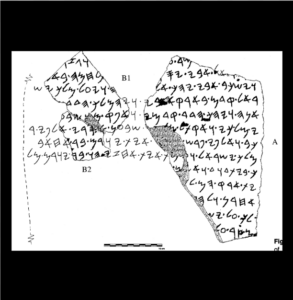
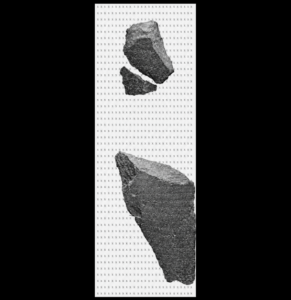
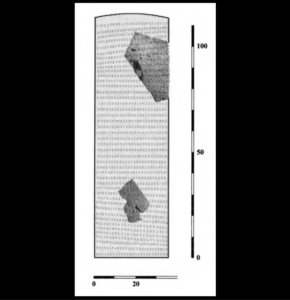
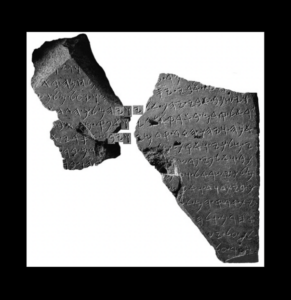
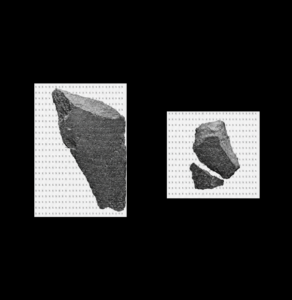
Why might any of that matter? Because fitting or not fitting together and relative position results in significantly different interpretative possibilities. As an example, when Biran and Naveh discovered Fragment A in 1993, they tentatively proposed that the text described the victory of Benhadad I, the king of Aram-Damascus, over Baasha, the king of Israel, corresponding to 1 Kings 15:20, That would suggest an early 9th century date (ca. 885 BCE).193 But with the discovery of the B fragments a year later, they revised their proposal. Now the text described the usurpation of the Aramean throne by Hazael, another king of Aram-Damascus, corresponding to 2 Kings 8:7–15, giving a late 9th century date (“in the later part of Hazael’s reign”).194 What their revision didn’t correspond to (as they freely admitted) was the biblical account in 2 Kings 9, which has Jehu, not an Aramean king, doing the killing.195
Beyond the name of the stele itself, there’s the issue of the names included or inferred in the text, starting with the “I”-figure, the “author” of the thing. Proposals include (but are not limited to) Benhadah I (ca. 880–870) based on 1 Kings 15:20; Benhadad II (ca. 870–842), based on 1 Kings 22; Benhadad III (ca. 806–755), based on 2 Kings 13:3, 24.196 An out-of-the-box proposal is that the “I” was none other than Jehu himself, which would fit neatly with the tale told in 2 Kings 9–10.197 The majority candidate, however, is Hazael, the king of Aram-Damascus who took to the throne in 843 BCE and took to his deathbed in 798. Hazael (Ḥăzāʾēl, “El sees”), you may remember from 2 Kings 19:15, was anointed king by Elijah (Ēlīyyā ,“My El is 𐤉𐤄𐤅𐤄”) at 𐤉𐤄𐤅𐤄’s prompting, as was Jehu. 𐤉𐤄𐤅𐤄 must have been in an out-with-the-old-in-with-the-new mood at the time, as both Hazael and Jehu were usurpers who won their respective thrones the old-fashioned way—by assassination. For his efforts, 𐤉𐤄𐤅𐤄 sent a fiery chariot with fiery horses to sweep Elijah heavenward in a whirlwind (2 Kings 2:11). That Elijah survived that ordeal is evidenced by the cameo appearance he made at Jesus’ transfiguration (Mark 9:4).
The only secure names in the fragments are Hadad, Israel, and the aforementioned Dwd. Hadad was an ancient Mesopotamian storm god. In the Ugaritic Baal Cycle, Hadad, whose name means “thunder” or “loud-voiced,” also went by the name Baal.
Other names appearing in translations of the inscription are inferred, based on educated guesses. So you’ll find -ram translated as “[Jeho]ram son of [Ahab].” Jehroram was the last king of the Omrid dynasty in Israel, Ahab was his father. And you’ll find -iahu translated as [Ahaz]iahu, son of [Jehoram…]—better known as Ahaziah (ʼĂḥazyāhū, “Yahu has grasped”) in English translations. If -iahu really is Ahaziah and -ram is really Jehoram, that would be Ahaziah king of Judah, not Ahaziah king of Israel. All very reasonable inferences, given the givens.
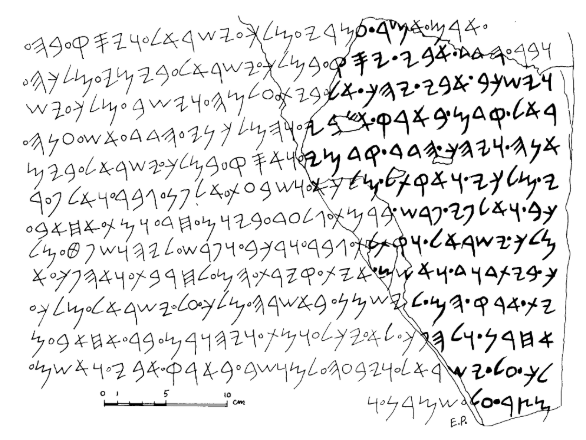
But why stop at reasonableness? Why not call upon invention as the mother of necessity? Such was the path taken by Émile Puech, a French Catholic priest and epigrapher. Peuch published a reconstruction of the text of Fragment A shortly after publication of the Editio Princeps by Biran and Naveh in 1994.198 It expands the text by some 200% and in so doing, finds any number of new names. In addition to those inferred by others and listed above, Peuch imagines the personal names Omri, “roi d’Israël”; Bar-Hadad I, the human king of Damascus, not Hadad the god; and Jehoshaphat, “le roi de la maison de David.” He further imagines the place names Ramoth-Gilead and Samaria.
Peuch’s inventiveness has not garnered much support. The most charitable characterization of the father’s effort is sehr optimistischer Texergänzung, “a very optimistic text addition.”199
Gezer calendar
9th century BCE
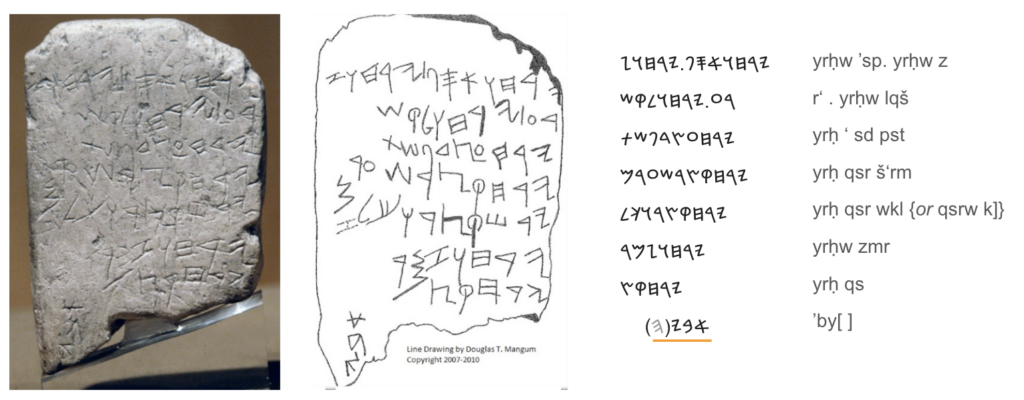
The Gezer calendar as displayed in the Istanbul Archaeology Museums (accession number 2089 T) (left), drawing (center left), facsimile (center left) transcription (center right) and transliteration with spaces added for word divisions (right).
At least two ways of thinking exist with respect to little things: they matter most or the devil is found in them. Such is the case with the so-called Gezer calendar. Take the innocent letter 𐤅, which occurs four times in the final position of the word yrḥ, “month.” What might it be doing there? Some scholars suggest it’s a waw compagnis, an extra /w/ added to yrḥ having no grammatical function—maybe just a traditional spelling or decorative addition. Others suggest it’s a consonantal dual, indicating more-than-one-but-less-than-three—think of the English dual “both.” Or it could indicate a plural, thus “months” rather than “month.” Or it could be a possessive, indicating “its.” Or maybe a number and not a letter at all, or an entirely different letter (/h/ or /n/), or a vowel rather than a consonant, or a conjunction.200
You might ask, Who cares? To which the answer would be, Real humans with faculty positions who are paid to spend their time debating such matters. You might then ask, Why would they do that? Because on such small matters hangs the fate of nations. Well, at least one nation which, through accidents of history, became the ideological Kulturvater of many others.
The city for which the “calendar” is named was excavated in 1902–1909 by R.A. Stewart Macalister on behalf of the Palestine Exploration Fund. Archaeology was still in its infancy in those days, and careful stratification was not observed. Macalister divided Gezer’s sequence with labels like “Pre‑Semitic,” “First Semitic,” “Second Semitic,” etc., but he wasn’t all that careful with the debris that each sequence produced. The inscription, which he named “The Calendar Tablet,” came from the Fourth Semitic debris pile. It reads as follows:
A couple of months of gathering
A couple of months of early sowing
A couple of months of late sowing
A month of making hay
A month of harvesting barley
A month of harvest and finishing
A couple of months of vine pruning
A month of summer fruit.201
ʾby[ ]
Macalister dated the tablet to the Fourth Semitic phase, which he defined (vaguely) as, “To the destruction of the Hebrew Monarchy (B.C. 1000–550).”202 The tablet itself he dated to the 6th century BCE—though he was open to suggestions: “Other palaeographers, however, regard it as being earlier by two centuries, which would give the writing the further interest of being the oldest Hebrew inscription as yet known.”203
Indeed so. Except, there are problems.
First, as the tablet was discovered out of context, its dating is uncertain and rests entirely on paleographic analysis alone, which is more art than science.204 The divergence of southern Levantine “national” scripts from the Phoenician Mutterschrift is now dated to the 9th century, when Moabite, Ammonite and Aramaic appear.205 The Mesha Stele, dated to 840 BCE, is Moabite in language but Hebrew in script. Thus, a mid-9th century date for the calendar is more secure.
Second, the language is now generally understood to be Phoenician, not Hebrew,206 putting a dent in claims that it’s the earliest Hebrew anything.
The third problem goes to little things. The first eight lines of the inscription are written in a neat right-to-left (sinistrograde) direction. The last line, in contrast, is columnar, top to bottom, and consists of just three letters: ʾby (“Abi”) after which the stone is broken. William F. Albright, who saw in the tablet’s script “perfectly classical Hebrew,” also saw in ʾby the name “Abiyah.” What a godsend for someone doing “biblical archaeology,” as Albright proudly was. Abiyah translates to “my father is Yah(weh).”207
Albright didn’t mention it, but he may have been thinking of the fourth king of the House of David who ruled for three short years in the late 10th century, Abiyah. Or so says 2 Chronicles 13:1. He has a different name in 1 Kings 15:1, Abijam, which means “my father is Yam [Sea],” a favorite godling of El in the Ugaritic Baal Cycle. Neither name makes sense, as whichever-it-was must have been a name given by Abi-whatever’s father, Rehobam, who must have known that the kid was not fathered by a god.
However that may be, ʾby is not a self-evidently Yahwistic theophoric name—or even a theophoric name at all. To get there you have to add an /h/, giving you ʾbyh, to which vowels could be added to get to Abiyah. That’s already doing a lot more work than innocent little letter 𐤅 referenced above is asked to do. At least the 𐤅 actually appears in the inscription; 𐤄 (h) is pure guess. If the inscription were in Hebrew and if Gezer in Iron Age IIA/B could be understood as having an Israelite or Judahite population, it might be a good guess. But neither is the case. Gezer was a border city, not a stable capital of one kingdom. Nobody knows who was in control of the place in the 10th or 9th centuries; all that can be said is that its inhabitants were vaguely Canaanite.
Which opens up any number of options for filling in the blank following ʾby. If only one additional letter is allowed (by itself an assumption), it could be Abiel (“my father is El”). If more than one additional letter is allowed, the options multiply: Abibaal (“my father is Baal”), to give a theophoric example, or Abimilk (“my father is king”), to give an anthrophoric example.
Or, it could be Abiyah after all, but as a name having no transcendent implications. The initial element ʾb (“father”) was extremely common in Ancient Near Eastern personal names, found in Amorite, Hebrew, Phoenician, Aramaic, Ammonite, Moabite, and Ugaritic names. The second element -iya was an equally common Semitic ending.208 So you’ll find Abiya, Ahiya, Ishiya, Uzziya etc. in a massive archive of Akkadian tablets (the Mari Archives, ca. 1800–1750 BCE) from the ancient city in modern Syria.209 These are diminutive names (technically, hypocoristic), like Debbie (for Deborah) or Larry (for Lawrence).
So it’s entirely possible that—if the three small letters dangling from the end of the inscription names anyone at all—it is the author of the likely 9th (not 10th) century Phoenician (not Hebrew) tablet found unprovenanced at Gezer: “Little Abi.”
Kuntillet ‘Ajrud inscriptions
8th century BCE
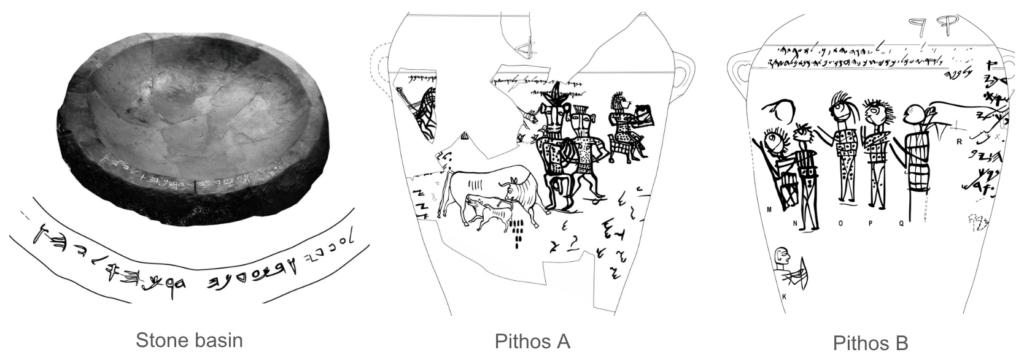
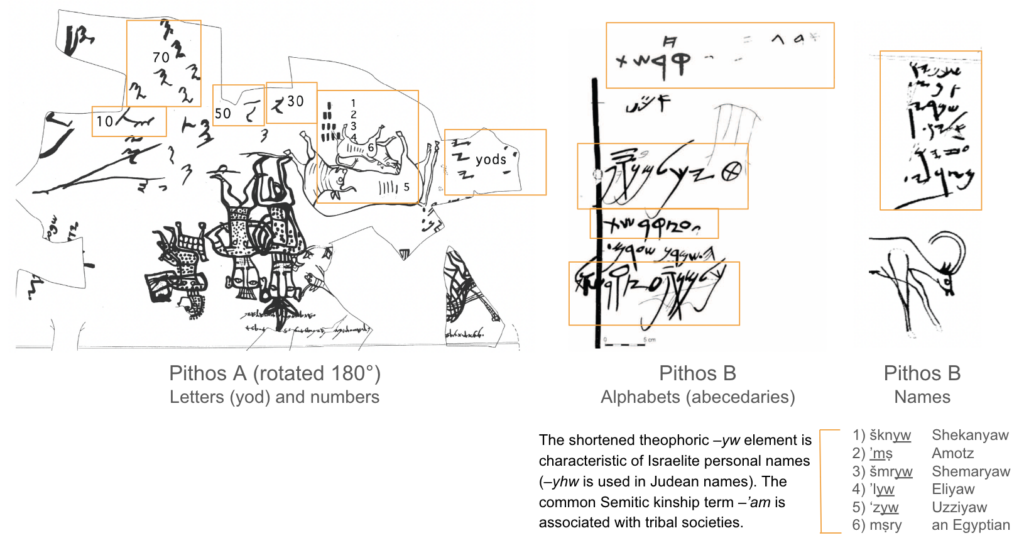
Inscriptions from the site of Kuntillet ‘Ajrud in the Sinai Peninsula: stone basin (top left) and two storage jars (pithoi) (top center and top left). The pithoi were used as practice tablets for apprentice scribes (bottom).
If you were a young Israelite in the 8th century BCE with an eye to climbing the social ladder by becoming a sôpēr māhîr (“skilled scribe”), you could do no better than to enlist in the army and ask for a posting at the remote garison named Kuntillet ‘Ajrud. There you would be provided with a reed pen, ink, and “paper” (clay jars, plastered walls) to practice the scribal dark arts under the tutelage of a master. The curriculum would include the alphabet, numbers, words, and names—which, once mastered, would allow you to move on to more accomplished feats: writing a proper epistle and keeping accounts.210 You would even learn to write the name that was destined to become the one above all: 𐤉𐤄𐤅𐤄. Your tuition is paid in-kind: to become a scribe at Kuntillet ‘Ajrud, you must first become a soldier.211
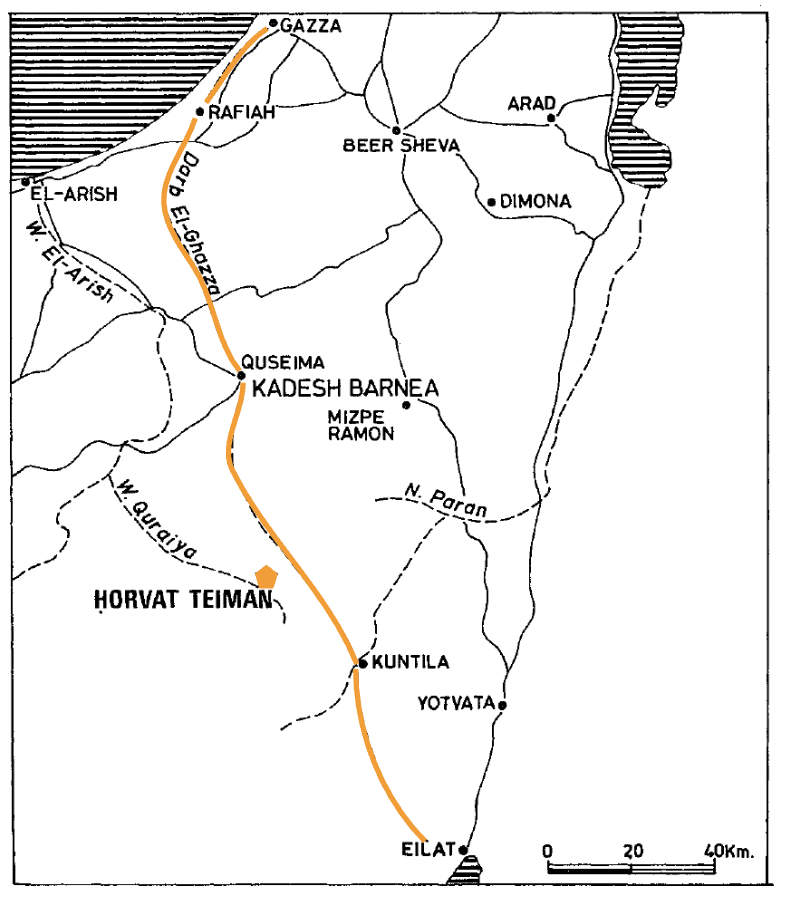
Kuntillet ‘Ajrud (Arabic for “solitary hill of wells”) was given the Hebrew name Ḥorvat Teiman (“the southern ruin”) by the site’s excavators, who would seem to have lacked any lyrical sensibility—or maybe they just didn’t like Arabs. However that may be, the ruin is in the far south, overlooking the Wadi Quraiya valley and about 15 km west a trade route named Darb el-Ghazza (“the way to Gaza”), a trail connecting Arabia to the Levant, running for roughly 250 km from Tell el-Kheleifeh at the head of the Gulf of Aqaba to Gaza on the Mediterranean Sea.
That the ruin dates to the 8th century BCE is generally agreed. Also agreed is that it was sponsored in some way by the kingdom of Israel (not Judah). Beyond that, little agreement is to be found—which is not so much the fault of scholars doing what scholars do (disagreeing endlessly) as to the genuine strangeness of the site. What was it? Its very structure and the stuff both found and not found in its remains beggar obvious explanation.
As for the structure, Kuntillet ‘Ajrud was built on the top of a hill and comprised two buildings. For one only the foundations remain. The preserved building was a large (29 x 15m) rectangle with tower-like structures at each of its four corners. That might make you think of a fortress, maybe to guard the wells dug at the bottom of the hill, a precious resource in the desert. But compared with Assyrian fortresses built in the late 8th century BCE and later, Kuntillet ‘Ajrud is wanting. While Assyrian fortresses had walls thick enough to withstand a sustained siege, those at Kuntillet ‘Ajrud are relatively thin. They might have survived a quick raid, but nothing more.212
As for the stuff associated with the structure, the mystery deepens. Pottery is to be expected at any archaeological dig, and pottery there was: storage vessels from Judah (the majority) and small votive vessels from Israel. No local “Negbite” pottery was found, and relatively few cooking vessels. The site lacked agricultural tools altogether.213 Found aplenty were fantastic paintings of humans, animals, a sacred tree flanked by ibex, a king or governor holding a lotus flower (a signifier of Levantine royalty) and two figures that might represent the Egyptian god Bes or 𐤉𐤄𐤅𐤄 himself accompanied by a consort—all inspired by Syrian iconography and executed in Phoenician style.214
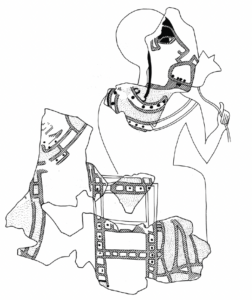
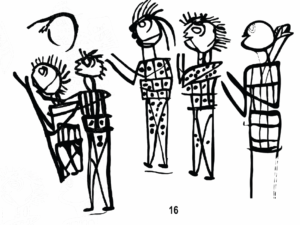
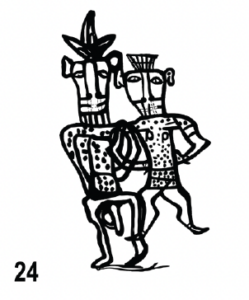
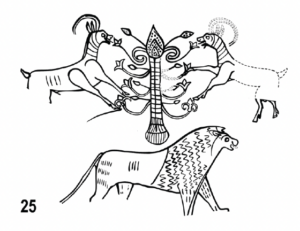
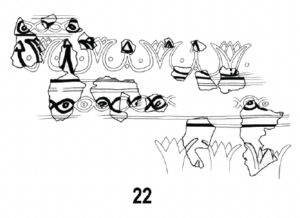
And then there are the inscriptions, painted on pots and plaster walls, speaking of gods including but not limited to 𐤉𐤄𐤅𐤄. El shines forth in a theophany, El and Baal prepare for war, blessings are offered in the name of 𐤉𐤄𐤅𐤄 and Asherah. On one of the pots, six individuals are named, four bearing the distinctly Israelite -yw element.215 Three limestone basins were found, the largest weighing over 200kg and bearing an inscription reading, “to/of Obadyaw, son of ‘Adna, blessed be he to YHW.”
The paintings and inscriptions speak compellingly of a cultic site, but the site lacks evidence of cultic practice. No altar was found, no evidence of sacrifice.
The site was almost certainly a place where the scribal craft was practiced. Two large pots (pithoi) show exercises in letters, numbers, alphabets and names. But a scribal center? That would be difficult to imagine, as the site is too small to have accommodated more than half a dozen people.216
Faced with such ambiguity, scholars have demonstrated a level of exegetical ingenuity that, if not so fabulous, might make 𐤉𐤄𐤅𐤄 proud he had breathed life into their nostrils. Based upon the thinnest of evidence (and in some cases, no evidence at all) scholars see in Kuntillet ‘Ajrud, variously:
- a religious center occupied by a small group of priests installed by the northern kingdom of Israel;
- a shrine where kings received divine blessings before marching toward the Red Sea for to go a-warring;
- a shrine inhabited by members of a prophetic movement;
- a way-station for pilgrims from northern Israel making their way to the mountain of god in the south;
- a way-station and center of scribal learning;
- a storage room for the sacred objects and treasures offered to Asherah by visitors who traveled to the site to participate in cultic activities conducted outside, around the goddess’s sacred tree or grove.217
Taken together—the personal names with the Israelite theophoric element -yw, the Phoenician influence in the iconography, the presence of some Samarian pottery and mention of “𐤉𐤄𐤅𐤄 of Samaria” on one of the inscribed pots—the evidence suggests that the site was built and maintained with support from the state of Israel. The dating of the site to the 8th century further endorses that thesis, as Judah was under Israelite domination in the time of Jeroboam II (788–747 BCE).
The language of the inscriptions presents a bit of a puzzle. Most scholars identify the script as Hebrew, in which case they would be the earliest Hebrew inscriptions containing “religious statements.”218 An alternative suggestion is that they are neither entirely Hebrew or entirely Phoenician, which “points to a link with north Palestine or with an area with which the Phoenicians traded, but not with Judah.”219
The problem in deciphering the inscriptions is, as ever with abjads, choosing the vowels to add; no one knows how Hebrew was vocalized in the 8th century BCE, and employing the Masoretic system for pointing Hebrew with vowels (known as the Tiberian niqqud) would be anachronistic, as it was developed about 1,800 years later.220 But try one must. What follows are two examples with subtle but significant differences.
| Inscription | Translation A | Translation B |
|---|---|---|
| Stone Basin (1.2) | To Obadyaw son of Adna, blessed be he to YHW | |
| Pithos A (3.1) | Message of ‘[ …] Speak to Yaheli and to Yawʿa)ah and to […] I [bless you by YHWH of Samaria and his Asherah | Message of ’[xx], ‘the ki[n]g’s friend’. Speak to Yahēl[yō], and to Yō‘āśā, and to […]. I have blessed you by YHWH of Samaria and to Asherata. |
| Pithos A (3.6) | Message of Amaryaw: say to [my] lord, “Are you well? I bless you by YHWH of Teman and his Asherah. May He bless you and may he keep you and may He be with my lord [forever(?)]” | Message of ’Amrayō: Say to my lord. Are you well? I have blessed you by YHWH of Teman and Ahserata. May He bless you and may He keep you, and may He be with the lord of your house (’dn bytk). |
| Pithos B (3.9) | […] to YHWH of the (?) Teman and to his Asherah […] Whatever he asks from a man, that man will give him generously. And if he would urge – YHW will grant him what he wishes. {3.8, uncertain: …[YHW]H of Samaria – barley …} | May he bless you by YHWH of Teman and Asherata. Whatever the ‘favourer of the father and his quiver’ asked from a man – YHW(H) shall give him according to his wish. |
| Plaster wall fragment (4.1.1) | [… May] he lengthen their days and may they be sated [… may] they recount to [Y]HWH of Teman and to [his] Asherah […] / [. ..because (?)] YHWH of Teman has shown favor [to them (?)…] has bettered their da[ys … ] | [May he (God)] bless their days so they may have [plenty] to eat [and…] recount (praises) to YHWH of the Teman and Asherata. YWHH of the Te[man] did good [….], set the vine [and the fig tre]e??. YH[WH] of the Te[man] has [….] |
| Plaster wall fragment (4.2) | ] in earthquake . And when El shines forth in the [ heights … Y] HW[H … ] the mountains will melt, the hills will be crushed [ . . . ] earth. The Holy one over gods [ … ] prepare (yourself) to [b]less Baal on the day of wa[r .. to bless/praise] the name of El (or: Name-of-El, as deity) on the day of wa[r .. | [….] in earthquake. And when God shone forth in the sum[mit of ….] [….] and the mountains melted and the humps crushed [….] he treaded on earth over the stones (eben), moved away (sāg) and tr[ampled ….] [….] he prepared (hēkīn) for the blessed one (berûk) of the Lord on the day of battl[e ….][….] for the name of God on the day of batt[le….] |
| Plaster wall fragment (4.3) | [… t]ents of Is[rael …] His birth, and he […] A poor and oppressed son of a ne[edy], a poor per[son ….] Their clothing are muddy, his garment defiled with blo[od …] Heap of water has passed and the sea [has dr]ied until? [….] [A burn]ing anger in a year of pl[ague], and hunger and desolate, the spear destroyed, falsehood and deceit […..]221 | |
| Plaster wall fragment (4.4.1) | ]Ba’al in voice[222 |
The first thing you might notice is that 𐤉𐤄𐤅𐤄 has company: El, Baal, Asherah and unnamed “gods,” which is at some odds with the biblical portrayal of 𐤉𐤄𐤅𐤄 as the one and only god (inscriptions 4.2 and 4.4.1). A second thing is that there may be more than one of him: 𐤉𐤄𐤅𐤄 of Samaria and 𐤉𐤄𐤅𐤄 of Teman (inscriptions 3.1, 3.6, 3.9 and 4.1.1). That would be typical of deities of the time, having distinct instantiations in different locales. The third thing—most troubling to those whose God-concepts were formed in pews of Christian churches—is that 𐤉𐤄𐤅𐤄 has not just a consort, but a wife.223 𐤉𐤄𐤅𐤄 and his Asherah together guarantee the blessings to individuals with Yahwistic names (inscriptions 3.1 and 3.6). And speaking of blessings, Baal not only is mentioned, but is to be blessed in a time of war (inscription 4.2).
Welcome to 𐤉𐤄𐤅𐤄 of the Monarchic Period.
The final thing you might notice—if you’re the noticing sort—may be the most important of all: the variations in translations. In Translation A (inscriptions 3.1, 3.6, 3.9 and 4.1.1) you’ll read of “YHWH of Samaria and his Asherah.” Translation B puts some distance between the couple, giving the reading “YHWH of Samaria and to Asherata.” So a wife becomes just a member of a shrunken divine cast. Translation A preserves El as a divine name; Translation B renders it as God. Translation A includes Baal; Translation B refuses to name him.
In general, Translation A captures the mytho-religious sensibility of Canaan in the 8th century BCE with its pantheon of El, Baal, 𐤉𐤄𐤅𐤄, Asherah, “Holy one” and “gods.” Translation B is more congenial to your English Bible than to the inscriptions themselves, a translation with El hidden behind “God” and Baal diminished.
HANDY TRANSLATION:
THE MESHA STELE
Translation by Edward Lipiński, On the Skirts of Canaan in the Iron Age: Historical and Topographical Researches, Orientalia Lovaniensia Analecta 153 (Peeters, 2006), 336–37.
1I am Mesha, son of Chemosh[yatt], king of Moab, the 2man of Dibon. My father had reigned over Moab for thirty years, and I became king 3after my father. I made this high place for Chemosh in his/its citadel. [I] built it being 4victorious, because he saved me from all the kings and let me triumph over all my adversaries. Omri 5was king of Israel and he had oppressed Moab many days, for Chemosh was angry with his land. 6And his son (Ahab) succeeded him and he also said: ‘I will oppress Moab’. In my days C[hemosh] spoke 7and I triumphed over him and over his house, and Israel perished utterly for ever, although Omri had occupied the land 8of Madaba, and had dwelt there in his days and half the days of his son, forty years. But 9Chemosh dwelt there in my days.
And I built Baal-Meon, and I made a reservoir in it, and I built 10Qiryatēn. Now, the men of Gad had dwelt in the land of Ataroth from of old, and the king of 11Israel had built Ataroth for him, but I fought against the town and took it, and I slew all the people of 12the town in due homage to Chemosh and to Moab. And I brought from there Uriel, its warden, and 13I dragged him before Chemosh at Qerioth, and I settled there men of Sharon and men of 14Maḥaroth. And Chemosh said to me: “Go, take Nebo from Israel!” So I 15went by night and fought against it from the break of dawn until noon, and I took 16it and slew it all, seven thousand men and boys, women and girls, 17and pregnant females, for I devoted it to Ashtar-Chemosh. And I took from there the 18[r]ams of Yahwe [𐤉𐤄𐤅𐤄] and dragged them before Chemosh. Now, the king of Israel had built 19Jahaz, and he had dwelt there while he was fighting against me, but Chemosh drove him out before me, [when] 20I took from Moab two hundred men, all its host , and I set it against Jahaz, and I took it 21in order to attach it to Dibon.
It was I who built its citadel, the wall of the garden and the wall 22of the acropolis. I also built its gates and I built its towers and 23I built the king’s house, and I made both reservo[irs for wa]ter inside 24the town. And there was no cistern inside the town, in its citadel, so I said to all the people: “Let each of you make for 25yourselves a cistern in his house!” And I dug the ditchess for its citadel with Israelite captives. 26I built Aroer and I made the highway in the Arnon. 27And I built Bēth-Bamoth, for it had been destroyed. I built Bezer, for it lay in ruins.
28And [the m]en of Dibon were in battle array, for all Dibon was a body-guard. And I let 29[the captains] of centuries rule in the towns which I had added to the land. And I built 30[Bēth-Mad]aba and Bēth-Diblatēn and Bēth-Baal-Meon, and I set there 31my shepherds [in order to tend] the sheep of the land. As for Hawronēn, there had dwelt the Hou[se of Da]vid [… 32 …], but Chemosh said to me: “Go down, fight against Hawronēn!” And I went down and 33[l fought against the town and I took it], and Chemosh [dwelt] there in my days, and the moth? [re]moved injustice? from there … 34 [… of sh]ame tore apart. And I … 35 […]
handy table A: Israelite monarchs
Dates follow those given by Israel Finkelstein and Neil Asher Silberman, The Bible Unearthed: Archaeology’s New Vision of Ancient Israel and the Origin of Sacred Texts, (Simon and Schuster: 2002), fig. 3.
| Ruler of Israel | Approx. dates BCE | Yahwistic? | Meaning |
|---|---|---|---|
| Jeroboam I | ca. 931–919 | no | “the people will contend” |
| Nadab | ca. 909–908 | no | “generous/noble” |
| Baasha | ca. 908–885 | no | “bringer of good news” |
| Elah | ca. 885–884 | no | “oak tree” |
| Zimri | ca. 884 | no | “my praise/music” |
| Omri | ca. 884–873 | no | “my sheaf” |
| Ahab | ca. 873–852 | no | “brother of the father” |
| Ahaziah | ca. 852–851 | yes | “YHWH has grasped/held” |
| Joram / Jehoram | ca. 852–842 | yes | “YHWH is exalted” or “YHWH has exalted” |
| Jehu | ca. 842–814 | yes | probably “YHWH is he” |
| Jehoahaz | ca. 817–800† | yes | “YHWH has grasped/held” |
| Joash / Jehoash | ca. 800–784 | yes | “YHWH has strengthened” |
| Jeroboam II | ca. 788-747† | no | “the people will contend” |
| Zechariah | ca. 747 | yes | “YHWH has remembered” |
| Shallum | ca. 747 | no | “recompense/reward” |
| Menahem | ca. 747–737 | no | not Yahwistic |
| Pekahiah | ca. 737–735 | yes | “YHWH has opened” or similar |
| Pekah | ca. 735–732 | no | “watchful/clear-sighted” |
| Hoshea | ca. 732–724 | no explicit YHWH | “he is salvation” |
†Includes coregencies.
handy table b: judahite monarchs
Dates follow those given by Israel Finkelstein and Neil Asher Silberman, The Bible Unearthed: Archaeology’s New Vision of Ancient Israel and the Origin of Sacred Texts, (Simon and Schuster: 2002), fig. 3.
| Ruler of Judah | Approx. dates BCE | Yahwistic? | Meaning |
|---|---|---|---|
| Rehoboam | ca. 931–914 | no | “he enlarges the people” |
| Abijam / Abijah | ca. 914–911 | no in Abijam form / yes in Abijah form | Abijam = “my father is Yam”; Abijah = “my father is YHWH”; |
| Asa | ca. 911–870 | no | “healer” |
| Jehoshaphat | ca. 870–846† | yes | “YHWH has judged” |
| Jehoram | ca. 851–843† | yes | “YHWH is exalted / has exalted” |
| Ahaziah | ca. 843–842 | yes | “YHWH has grasped/held” |
| Athaliah, queen | ca. 842–836 | yes | “YHWH is my strength” |
| Joash / Jehoash | ca. 836–798 | yes | “YHWH has strengthened” |
| Amaziah | ca. 798–769 | yes | “YHWH is strong” |
| Uzziah / Azariah | ca. 785–733† | yes | Uzziah = “YHWH is my strength”; Azariah = “YHWH has helped” |
| Jotham | ca. 743–729† | yes | “YHWH is perfect” |
| Ahaz | ca. 743–727† | no | abbreviation of Jehoahaz, “YHWH has grasped/held” |
| Hezekiah | ca. 727–698 | yes | “YHWH strengthens” |
| Manasseh | ca. 698–642 | no | “to forget” |
| Amon | ca. 641–640 | no | “the hidden one/invisible” |
| Josiah | ca. 639–609 | yes | originating from Yoshiyahu, “YHWH heals/supports” |
| Jehoahaz | ca. 609 | yes | “YHWH has grasped/held” |
| Jehoiakim | ca. 608–598 | yes | “YHWH raises up”; renamed from Eliakim, “El raises up”‡ |
| Jehoiachin / Jeconiah | ca. 597 | yes | “YHWH establishes” |
| Zedekiah | ca. 596–586 | yes | “YHWH is righteousness”; renamed from Mattaniah, “gift of YHWH”‡ |
†Includes coregencies.
‡Pharaoh Necho changed Eliakim’s name to Jehoiakim; Nebuchadnezzar changed Mattaniah’s name to Zedekiah.
- Deut 33:2. Cf. Ps 68:8–9, 18, Judg 5:4–5, Hab 3:3 and 3:10a. ↩︎
- Ernst Axel Knauf, “Seir (Place)”, in David Noel Freedman ed., The Anchor Bible Dictionary: Volume 5 O–Sh (Doubleday, 1992), 1072. ↩︎
- Dennis Pardee, Ritual and Cult at Ugarit, Writings from the Ancient World 10 (Atlanta, GA: Society of Biblical Literature, 2002), 233–35 and Glossary, 267–85. ↩︎
- Mark S. Smith, The Origins of Biblical Monotheism: Israel’s Polytheistic Background and the Ugaritic Texts (Oxford University Press, 2003), ch. 1, §5. ↩︎
- KTU 1.1 IV 13–20, trans. Mark S. Smith in Simon B. Parker ed., Ugaritic Narrative Poetry, Writings from the Ancient World Series 9 (Atlanta, GA: Society of Biblical Literature, 1997), 89. ↩︎
- Johannes C. De Moor, The Rise of Yahwism: The Roots of Israelite Monotheism (Leuven University Press, 1997), 164–65. ↩︎
- See De Moor, The Rise of Yahwism,164–71 and Mark S. Smith, The Ugaritic Baal Cycle: Volume I (Leiden/New York/Köln: Brill, 1994), 151–52. ↩︎
- E.g., Martin Leuenberger, “YHWH’s Provenance from the South,” in Jörgen Oorschot and Markus van–Witte eds., The Origins of Yahwism (Berlin: De Gruyter, 2017), 164, n. 23.: “The god name Yawwu (yw) which Ilu [El] changes to Yammu (ym) in KTU 1.1 IV,14 f, has no connection with the tetragrammaton, but probably reflects the middle Babylonian change w > m.” ↩︎
- Joanna Töyräänvuori, “The Royal Adoption Scene in Ugaritic and Biblical Texts,” in Olga Drewnowska and Małgorzata Sandowicz eds., Fortunes and Misfortune in the Ancient Near East (Winona Lake, IN: Eisenbrauns, 2017), 247, n.1. ↩︎
- So Thomas Römer, The Invention of God, Raymond Geuss trans. (Cambridge, MA: Harvard University Press, 2015), 37. ↩︎
- The title occurs 284 times in the Hebrew Bible, though it is absent in the Pentateuch. ↩︎
- F.M Cross, Canaanite Myth and Hebrew Epic (Cambridge, MA: Harvard University Press, 1973), 60–75. Cross did not suggest that the epithet he proposed suggested a northern point of origin for Yahweh. “If Yahweh is recognized as originally a cultic name of ‘El, perhaps the epithet of ‘El as patron deity of the Midianite League in the south. . . .” ↩︎
- John Day, Yahweh and the Gods and Goddesses of Canaan, Journal for the Study of the Old Testament Supplement Series 265 (London/New York: Sheffield Academic Press, 2000), ch. 1. ↩︎
- Faried Adrom and Matthias Müller, “The Tetragrammaton in Egyptian Sources – Facts and Fiction,” in Jörgen Oorschot and Markus van–Witte eds., The Origins of Yahwism. (Berlin: De Gruyter, 2017), 93. ↩︎
- William L. Moran ed. and trans., The Amarna Letters (Baltimore/London: Johns Hopkins University Press, 1992), 325. ↩︎
- Moran, The Amarna Letters, 328. ↩︎
- Richard S. Hess, Amarna Personal Names, American Schools of Oriental Research 9 (Winona Lake, IN: Eisenbrauns, 1993), 233–42. ↩︎
- Keiko Tazawa, Syro-Palestinian Deities in New Kingdom Egypt, BAR Series 1965 (Oxford: BAR Publishing, 2009), 1.
↩︎ - Tazawa, Syro-Palestinian Deities in New Kingdom Egypt, 102–17. ↩︎
- Eythan Levy, “A Fresh Look at the Baal-Zaphon Stele,” The Journal of Egyptian Archaeology 100, no. 1 (2014): 294–95. ↩︎
- Racheli Shalomi-Hen, “Signs of YHWH, God of the Hebrews, in New Kingdom Egypt” Entangled Religions 12 no. 2 (2021), §§22–25. An exception to this was the Egyptian god Seth (𓃩 and 𓃫), who came to represent the Semitic Baal; Baal might be spelled out and then stamped with the classifier 𓃫, or just indicated by 𓃫 alone. ↩︎
- The Medinet Habu lists are found in a mortuary temple of Ramesses III. The first pylon of the southern tower has 125 cartouches encircling names. Cartouche no. 115 has the name 𓇋//𓇋𓉔𓄿𓈉. Adrom and Müller transcribe the name as y-h (“The Tetragrammaton in Egyptian Sources,” 103–08), Shalomi-Hen transcribes yha (Shalomi-Hen, “Signs of YHWH,” §§14–17. The determinative for land, 𓈉, indicates a toponym, not a theonym. ↩︎
- 1 Kgs 11:31b. ↩︎
- 2 Chron 21:4. ↩︎
- Israel Finkelstein and Neil Asher Silberman, The Bible Unearthed: Archaeology’s New Vision of Ancient Israel and the Origin of Sacred Texts (Simon and Schuster, 2002), ch. 9. ↩︎
- 2 Kgs 14:9. ↩︎
- Christian Frevel, “When and from where did YHWH emerge? Some reflections on early Yahwism in Israel and Judah,” Entangled Religions 12, no. 2 (2021): §26. See also Michael J. Stahl, “God’s Best ‘Frenemy’: A New Perspective on YHWH and Baal in Ancient Israel and Judah,” Semitica 63 (2021): 89. ↩︎
- 1 Kgs 22:4, 2 Kgs 3:6–7, 14:13. ↩︎
- Frevel, “When and from where did YHWH emerge?, §65. ↩︎
- Frevel, “When and from where did YHWH emerge?, §65. ↩︎
- So Joseph Naveh, Early History of the Alphabet: An Introduction to West Semitic Epigraphy and Palaeography (Brill, 1982), 66 and Christopher A. Rollston, Writing and Literacy in the World of Ancient Israel: Epigraphic Evidence from the Iron Age, SBL Archaeological and Biblical Studies 11 (Society of Biblical Literature, 2010), 42. ↩︎
- Reinhard G. Kratz, “Chemosh’s Wrath and Yahweh’s No,” in R.G Kratz and H. Spieckermann eds., Ideas of Divine Wrath in Moab and Israel, Forschungen zum Alten Testament 33 (Tübingen, 2008), 92. ↩︎
- 2 Kgs 3:27. ↩︎
- Kratz, “Chemosh’s Wrath and Yahweh’s No,” 93–94. ↩︎
- For a brief overview of the etymology of Chemosh, see Lukasz Tobola, “The Divine Name Chemosh: A New Etymological Proposal,” Biblica 94, no. 4 (2013): 573-75. ↩︎
- Edward Lipiński, On the Skirts of Canaan in the Iron Age: Historical and Topographical Researches, Orientalia Lovaniensia Analecta 153 (Peeters, 2006), 320. ↩︎
- William M. Schniedewind, A Social History of Hebrew: Its Origins through the Rabbinic Period (Yale University Press, 2013), 94. ↩︎
- Bruce Routledge, “The politics of Mesha: Segmented identities and state formation in Iron Age Moab,” Journal of the Economic and Social History of the Orient 43, no. 3 (2000): 224–25. ↩︎
- Seth L. Sanders, The Invention of Hebrew (University of Illinois Press, 2011), 115–16. ↩︎
- Mesha Stele, lines 15–17, translated by Edward Lipiński, On the Skirts of Canaan in the Iron Age, 336. ↩︎
- Mark S. Smith, “YHWH’s Original Character: Questions about an Unknown God,” in Jürgen van Oorschot and Markus Witte eds., The Origins of Yahwism, Beihefte zur Zeitschrift für die alttestamentliche Wissenschaft 484 (De Gruyter, 2017), 28. For the full hypothesis, see pp. 25–29. ↩︎
- 2 Kgs 23:34. ↩︎
- Steven Grosby, “Borders, territory and nationality in the ancient Near East and Armenia,” Journal of the Economic and Social History of the Orient 40, no. 1 (1997): 6. ↩︎
- Seth L. Sanders, “When the Personal Became Political: An Onomastic Perspective on the Rise of Yahwism.” Hebrew Bible and Ancient Israel 4, no. 1 (2015): 80–82. ↩︎
- Rainer Albertz and Rüdiger Schmitt, Family and Household Religion in Ancient Israel and the Levant (Penn State Press, 2012), 508, table 5.7. ↩︎
- Sanders, “When the Personal Became Political,” 77. ↩︎
- Sanders, “When the Personal Became Political,” 80. ↩︎
- Attributed to Max Weinreich, a specialist in Yiddish linguistics, in a speech given at the 1945 YIVO conference. ↩︎
- Rollston, Writing and Literacy in the World of Ancient Israel, 42 ↩︎
- P. Kyle McCarter, “Paleographic Notes on the Tel Zayit Abecedary,” in Ron E. Tappy and P. Kyle McCarter Jr. eds., Literate Culture and Tenth-Century Canaan: The Tel Zayit Abcedary in Context (Eisenbraus, 2008), 49. ↩︎
- Schniedewind, A Social History of Hebrew, 79. ↩︎
- Sanders, The Invention of Hebrew, 116. ↩︎
- Gen 10:5. ↩︎
- Rollston, Writing and Literacy in the World of Ancient Israel, 113. ↩︎
- Christopher A. Rollston, “Scribal education in ancient Israel: The Old Hebrew epigraphic evidence,” Bulletin of the American Schools of Oriental Research 344, no. 1 (2006): 60. ↩︎
- Rollston, Writing and Literacy in the World of Ancient Israel, 42–44. ↩︎
- Jewish Virtual Library, “Eliezer Ben-Yehuda (1858–1922),” accessed May 30, 2026. ↩︎
- Fabian Pfitzmann, “Poly-Yahwism and the Multiple Origins of Yhwh,” Semitica (2021), 100–103. ↩︎
- Callimachus, Hymns and Epigrams. Lycophron. Aratus, Trans. A.W. Mair and G.R. Mair, Loeb Classical Library 129 (William Heinemann, 1921). Hymn I, to Zeus. ↩︎
- Exod 6, Ezek 20:5, Hos 12:10. ↩︎
- Deut 32:10. ↩︎
- Exod 2–4; 18. ↩︎
- Exod 19–24, Jdg 5:5, Deut 33:2, Ps 68:8. ↩︎
- Jdg 5:4, Deut 33:2. ↩︎
- Deut 33:2, Hab 3:3. ↩︎
- Hab 3:3. ↩︎
- 1 Kgs 12:28. ↩︎
- Num 21:4–9. ↩︎
- 1 Sam 5. ↩︎
- 2 Sam 22:8–16, Isa 30:3-–33. ↩︎
- Ps 103:8–14, Exodus 34:6–7. ↩︎
- Exod 22:29, where 𐤉𐤄𐤅𐤄 requires the firstborn son; cf. Jeremiah 19:4–6 where the thought never entered his head. See Jon D. Levenson, The Death and Resurrection of the Beloved Son: The Transformation of Child Sacrifice in Judaism and Christianity (Yale University Press, 1995), esp. 3–17. ↩︎
- Pfitzmann, “Poly-Yahwism and the Multiple Origins of Yhwh,” 95–113. ↩︎
- Yonatan Adler, The Origins of Judaism: An Archaeological Reappraisal (Yale University Press, 2022). ↩︎
- An engaging description of Khety’s tomb is given in H.E. Winlock, Excavations at Deir el Bahri 1911–1931 (MacMillan, 1942), 68–71. ↩︎
- In Greek mythology, Busiris was an ancient king of Egypt, son of Poseidon, who, at the direction of an oracle, sacrificed a foreigner to Zeus annually to end a nine-year famine. Herakles was an intended victim but managed to break his bonds and kill Busiris. ↩︎
- Translation by Alan H. Gardiner, “The Tomb of a Much-Travelled Theban Official,” The Journal of Egyptian Archaeology 4, no. 1 (January 1917), 35. ↩︎
- Translation by Faried Adrom and Matthias Müller, “The Tetragrammaton in Egyptian Sources, 94. ↩︎
- Gardiner, “The Tomb of a Much-Travelled Theban Official,” 36. See also Adrom and Müller, “The Tetragrammaton in Egyptian Sources,” 94. ↩︎
- Raphaël Giveon, “Toponymes ouest-asiatiques à Soleb,” Vetus Testamentum (1964): 244: “The orthography at Amarah West is slightly different. The sign 𓍯 (T12 in Gardiner’s list) replaces the similar sign, 𓌗 (V4 in the same list of signs). The toponym appears as early as the 11th Dynasty, at the end of the 3rd millennium BC [Biography of Khety]. With a slightly different orthography, it is found in the list of Ramesses III at Medinet Habu, immediately preceding twr. The term reappears in another topographical list of Ramesses III.” ↩︎
- ‘Uzi Avner, “The Desert’s Role in the Formation of Early Israel and the Origin of Yahweh,” Entangled Religions 12, no. 2 (2021), §§ 32–33. So also Manfred Weippert, James D. Martin trans., The Settlement of the Israelite Tribes in Palestine, Studies in Biblical Theology, Second Series 21 (London: SCM Press, 1967),105–06, n. 14. ↩︎
- Gardiner, “The Tomb of a Much-Travelled Theban Official,” 35. ↩︎
- So Gershon Galil, the lead epigrapher on the project, Appian Media, “Mt. Ebal ‘Curse Tablet’ Full Press Conference,” https://www.youtube.com/watch?v=VDD92qp_lfQ, accessed May 5, 2026. ↩︎
- “Wet sifting (wet screening) is a technique where water is used to help filter the soil. In wet sifting, archaeologists take a soil sample (sometimes one that has already been dry sifted roughly) and soak or spray it with water over a screen. The water turns the soil into mud slurry, which breaks apart clumps of dirt. Mud and silt wash through the sieve, leaving behind clean artefacts on the mesh.” Lutz Hendricks, “Archaeological Sifting: Dry vs. Wet Techniques Explained,” accessed May 4, 2026. ↩︎
- Adam Zertal, “An Early Iron Age Cultic Site on Mount Ebal: Excavation Seasons 1982–1987,” Tel Aviv 14.2 (1987): 105–165. Note that Zertal was initially hesitatent in interpreting the installation as Joshua’s altar, but became convinced. ↩︎
- Associates for Biblical Research, “About ABR,” accessed May 5, 2026. ↩︎
- Scott Stripling et al., “‘You are Cursed by the God YHW:’ An Early Hebrew Inscription from Mt. Ebal,” Heritage Science 11, no. 105 (2023), 1–24. ↩︎
- Stripling et al., “‘You are Cursed by the God YHW,’ 22. ↩︎
- Stripling et al., “‘You are Cursed by the God YHW,’ 16. ↩︎
- Stripling et al., “You are Cursed by the God YHW,” 1. ↩︎
- Aren M. Maeir and Christopher Rollston, “The So-Called Mount Ebal Curse Tablet,” Israel Exploration Journal 73, no. 2 (2023): 134. ↩︎
- Mark S. Haughwout, “Mt. Ebal curse tablet? A Refutation of the Claims Regarding the So-called Mt. Ebal Curse Tablet,” Heritage Science 12, no. 1 (2024): 1–2. ↩︎
- Haughwout, “Mt. Ebal Curse Tablet?”, 2. ↩︎
- Haughwout, “Mt. Ebal Curse Tablet?”, 6. ↩︎
- Maeir and Rollston, “The So-Called Mount Ebal Curse Tablet,” 137–38. ↩︎
- Maeir and Rollston, “The So-Called Mount Ebal Curse Tablet,” 136. ↩︎
- Haughwout, “Mt. Ebal Curse Tablet?”, 11. ↩︎
- Robert Cargill, Bible and Archaeology, “See for Yourself: Analyzing the Ebal ‘Inscription,’” accessed May 5, 2026. ↩︎
- Amihai Mazar, “The Lead Object from Mount Ebal as a Fishing-Net Sinker,” Israel Exploration Journal 73, no. 2 (2023): 143, n. 1. ↩︎
- Haughwout, “Mt. Ebal Curse Tablet?”, 7. ↩︎
- Associates for Biblical Research, “YaHWeh Curse Tablet: A Tsunami from Mt. Ebal,” https://www.youtube.com/watch?v=gU5njOpRCHQ, accessed May 5, 2026. ↩︎
- Raphael Giveon, Les bédouins Shosou des documents égyptiens, Vol. 18 (Brill, 1971), 24–28. For the final hieroglyph rendered as /a/ (𓄿) rather than /w/ (𓅱) see Shalomi-Hen, “Signs of YHWH,” n. 10. ↩︎
- Theodore J. Lewis, The Origin and Character of God: Ancient Israelite Religion through the Lens of Divinity (Oxford University Press, 2020), 230. ↩︎
- Donald B. Redford, Egypt, Canaan, and Israel in Ancient Times (Princeton University Press, 1992), 271–72. ↩︎
- Titus Kennedy, “The Land of the š3sw (Nomads) of yhw3 at Soleb.” Dotawo: A Journal of Nubian Studies 6 no.1 (2019), 189. ↩︎
- So Lewis, The Origin and Character of God, 229–32, and Römer, The Invention of God, 38–40. ↩︎
- Daniel E. Fleming, Yahweh before Israel: Glimpses of History in a Divine Name, (Cambridge University Press, 2020), 273–75. ↩︎
- Frevel, “When and from where did YHWH emerge?, §16. ↩︎
- Fleming, Yahweh before Israel, 65. See also Adrom and Müller, “The Tetragrammaton in Egyptian Sources,” 111–12: “Despite the phonologically possible match between the hieroglyphic Y-h-w in Soleb and Amarah-West, and what one might expect as rendition of the Tetragrammaton in hieroglyphs. The attribution to possible ‘(proto‐)Israelites’ remains hypothetical, since reliable facts about the historical linguistic and cultural background for Y-h-w at Soleb and Amarah-West are not available.” ↩︎
- Adrom and Müller, “The Tetragrammaton in Egyptian Sources,” 113, n. 118. ↩︎
- Adrom and Müller, “The Tetragrammaton in Egyptian Sources,” 108. ↩︎
- Thomas Schneider, “The First Documented Occurrence of the God Yahweh? (Book of the Dead Princeton ‘Roll 5’:),” Journal of Ancient Near Eastern Religions 7, no. 2: 113–120. ↩︎
- Schneider, “The First Documented Occurrence,” 114. ↩︎
- Barbara Lüscher, “Princeton Pharaonic Roll 5: An Ancient Egyptian Book of the Dead for an Asiatic,” The Princeton University Library Chronicle 71, no.3 (Spring 2010): 460. ↩︎
- Lüscher, “Princeton Pharaonic Roll 5,” 458. ↩︎
- Schneider, “The First Documented Occurrence,” 113. ↩︎
- Daniel E. Fleming, Yahweh before Israel, 3, n. 4. ↩︎
- E.g., Lewis, The Origin and Character of God, 232–33; Römer, The Invention of God, 38; Smith, “YHWH’s Original Character,” 25; Manfred Bietak, “On the Historicity of the Exodus: What Egyptology Today Can Contribute to the Biblical Account of the Sojourn in Egypt,” in Thomas E. Levy, Thomas Schneider and William C. Propp eds., Israel’s Exodus in Transdisciplinary Perspective (Springer, 2015), 19–20. ↩︎
- So Shalomi-Hen, “Signs of YHWH, §16. ↩︎
- Adrom and Müller, “The Tetragrammaton in Egyptian Sources, 108–09. ↩︎
- Adrom and Müller, “The Tetragrammaton in Egyptian Sources,” 98. ↩︎
- Shalomi-Hen, “Signs of YHWH, §12. ↩︎
- Adrom and Müller, “The Tetragrammaton in Egyptian Sources,” 100, ns. 46 and 47. ↩︎
- So, e.g., Robert D. Miller II, Yahweh: Origin of a Desert God (Vandenhoeck & Ruprecht, 2021 ), 49–60. ↩︎
- See the summary of explanations in Adrom and Müller, “The Tetragrammaton in Egyptian Sources,” 99–101. ↩︎
- Adrom and Müller, “The Tetragrammaton in Egyptian Sources,” 99, first pointed out by M.C. Astour, “Yahweh in Egyptian Topographical Lists,” in M. Görg E. Pusch eds., Festschrift Elmar Edel (Bamberg 1979), 21. ↩︎
- W.M. Flinders Petrie, Seventy Years In Archaeology: A Father in Egyptology (Routledge, 2013), 172. ↩︎
- The Kurkh Monoliths, two Assyrian stelae (ca.852 BCE and 879 BCE), refers to A-ha-ab-bu Sir-ʾila-a-a, “Ahab the Israelite / Ahab of Israel.” The stele says Ahab contributed 2,000 chariots and 10,000 soldiers to the anti-Assyrian coalition. ↩︎
- Translation by Richard C. Steiner, “Merenptah’s Israel, His Shashu Militiamen, His Copper Caravan Route, and the Watering Stations Bearing His Name at Kadesh-barnea and Me-nephtoah: Part One,” in Foy D. Scalf and Brian P. Muhs eds., A Master of Secrets in the Chamber of Darkness (Institute for the Study of Ancient Cultures, 2024), 331. Added is the bracket identifying Merneptah’s throne name, which means “The Ba/Soul of Re, beloved of the gods.” ↩︎
- Gösta W. Ahlström and Diana Edelman, “Merneptah’s Israel,” Journal of Near Eastern Studies 44, no. 1 (1985): 59–61. ↩︎
- For a summary, see Michael G.Hasel, “Israel in the Merneptah Stela,” Bulletin of the American Schools of Oriental Research 296, no. 1 (1994), 47–51. ↩︎
- John J. Bimson, “Merenptha’s Israel and Recent Theories of Israelite Origins,” Journal for the Study the Old Testament 16, no. 3 (1991), 21–23. ↩︎
- Hasel, “Israel in the Merneptah Stela,” 54. ↩︎
- E.g., Ahlström and Edelman, “Merneptah’s Israel,” 59–61. ↩︎
- Hasel, “Israel in the Merneptah Stela,” 51–52. ↩︎
- Römer, The Invention of God, 75–76. ↩︎
- Frank J. Yurco, “Merenptah’s Canaanite Campaign,” Journal of the American Research Center in Egypt 23 (1986), 190 n. 3. ↩︎
- John L. Foster, Ancient Egyptian Literature: An Anthology (University of Texas Press, 2001), xv–xvi: “For their poems ancient Egyptian poets used a couplet form: the lines of the poems were grouped in twos, and each pair of lines completed a verse sentence. There were variations upon this basic form (triplets and quatrains), but the generalization is fundamental to understanding the structure of the poems.” ↩︎
- Hasel, “Israel in the Merneptah Stela,” 54. ↩︎
- Yurco, “Merenptah’s Canaanite Campaign,” 211; see also 190, n.3. ↩︎
- Steiner, “Merenptah’s Israel,” 333–34. ↩︎
- Peter T. Daniels and William Bright eds., The World’s Writing Systems (Oxford University Press, 1996), 33 and 73. ↩︎
- Nadat Na’am, “The ‘Conquest of Canaan’ in the Book of Joshua and in History,” in Israel Finkelstein and Nadav Na’am eds., From Nomadism to Monarchy: Archaeological & Historical Aspects of Early Israel (Biblical Archaeology Society, 1994), 219–20. ↩︎
- Lecpius apud Steiner, “Merenptah’s Israel,” 338, n. 59. ↩︎
- Steiner, “Merenptah’s Israel,” 350. ↩︎
- Encyclopedia.com, “Wiener, Harold Marcus,” accessed May 9, 2026. ↩︎
- Kent P. Jackson, “The Language of the Mesha‘ Inscription,” in Andrew Dearman ed., Studies in the Mesha Inscription and Moab, Archaeology and Biblical Studies 2 (Scholars Press, 1989), 98. ↩︎
- The quote is a truncation of Tsar Nicholas I’s comment to the British Ambassador, Sir George Hamilton Seymour. The Tsar said: “We have a sick man on our hands, a man gravely ill. It will be a great misfortune if one of these days he slips through our hands, especially before the necessary arrangements are made.” ↩︎
- “Palestine,” Proceedings of the Church Missionary Society for Africa and the East (1868–69) apud M. Patrick Graham, “The Discovery and Reconstruction of the Mesha Inscription,” in Andrew Dearman ed., Studies in the Mesha Inscription and Moab, Archaeology and Biblical Studies 2 (Scholars Press, 1989), 48. ↩︎
- Keith Whitelam, “The Archaeological Study of the Bible,” in J. Riches ed., The New Cambridge History of the Bible, (Cambridge University Press, 2015), 141–42. ↩︎
- F.A. Klein, “The Original Discovery of the Moabite Stone,” Palestine Exploration Fund Quarterly Statement, 1869–1870, 282. ↩︎
- Klein, “The Original Discovery of the Moabite Stone,” 282–83. ↩︎
- Charles Warren, “The Moabite Stone: Captain Warren’s First Account of the Inscription from Moab,” Palestine Exploration Fund Quarterly Statement, 1869–1870, 169. ↩︎
- For a scholarly review of the discovery, see M. Patrick Graham, “The Discovery and Reconstruction of the Mesha Inscription,” in Andrew Dearman ed., Studies in the Mesha Inscription and Moab, Archaeology and Biblical Studies 2 (Atlanta, GA: Scholars Press, 1989), 41–92. For a more approachable narrative, see Neil Asher Silberman, Digging for God and Country: Exploration, Archaeology, and the Secret Struggle for the Holy Land 1799–1917 (Knopf, 1982), 100–12. ↩︎
- Rollston, Writing and Literacy in the World of Ancient Israel, 53. ↩︎
- André Lemaire, “The Meshe Stele and the Omri Dynasty,” in Lester Grabbe ed., Ahab Agonistes: The Rise and Fall of the Omri Dynasty (T&T Clark, 2007), 141–42. ↩︎
- Klein, “The Original Discovery of the Moabite Stone,” 282. ↩︎
- J.J. Teirney “Mesha,” in The Catholic Encyclopedia (Encyclopedia Press, 1911), 210. ↩︎
- James King, Moab’s Patriarchal Stone: Being an Account of the Moabite Stone, Its Story and Teaching (London: Bickers & Son, 1878), 157–58. ↩︎
- Friedrich Wilhelm Schultz (1877) summarized in Davide Ventury, “The Mesha Stele: a Reappraisal of a Forgery,” preprint, ResearchGate, May 2021, 4. ↩︎
- Albert Löwy, summarized in Ventury, “The Mesha Stele: a Reappraisal of a Forgery,” 3. ↩︎
- Yehuda, “The Story of a Forgery and the Mēša Inscription,” 162. ↩︎
- William Foxwell Albright, “Is the Mesha Inscription a Forgery?,” The Jewish Quarterly Review 35, no. 3 (1945): 247–250. ↩︎
- Ventury, “The Mesha Stele: a Reappraisal of a Forgery,” 4–6. ↩︎
- Albright, “Is the Mesha Inscription a Forgery?,” 250. ↩︎
- So André Lemaire, “House of David; Restored in Moabite inscription,” The Biblical Archaeology Review 20, no. 3 (1994): 30–37. ↩︎
- So Israel Finkelstein, Nadav Na’aman and Thomas Römer. “Restoring Line 31 in the Mesha Stele: The ‘House of David’or Biblical Balak?” Tel Aviv 46, no. 1 (2019): 3–11. ↩︎
- Avraham Biran and Joseph Naveh, “The Tel Dan Inscription: A New Fragment,” Israel Exploration Journal 45, no. 1 (1995), 12–13. ↩︎
- Bible Hub, “Why did God Permit Jehu to kill Joram?“, accessed May 25, 2026. ↩︎
- George Athas, The Tel Dan Inscription: A Reappraisal and a New Interpretation, Journal for the Study of the Old Testament Supplement Series 360 (Sheffield Academic Press, 2003), 318. ↩︎
- Philip R. Davies, “‘House of David’ Built on Sand: The Sins of the Biblical Maximizers,” Biblical Archaeology Review 20, no. 4 (1994): 54–55. ↩︎
- Baruch Halpern, “Erasing History: The Minimalist Assault on Ancient Israel,” Bible Review 11, no. 6 (1995): 26. ↩︎
- Niels Peter Lemche, and Thomas L. Thompson, “Did Biran Kill David? The Bible in the Light of Archaeology,” Journal for the Study of the Old Testament 19, no. 64 (1994): 3–21. ↩︎
- Anson F. Rainey, “The ‘House of David’ and the House of the Deconstructionists,” Biblical Archaeology Review 20, no.6 (1994): 47. ↩︎
- Keith N. Schoville, “Digging Dan – 1976 Season,” Hebrew Studies 18 (1977), 174. ↩︎
- Lawrence J. Mykytiu, Identifying Biblical Persons in Northwest Semitic Inscriptions of 1200–539 B.C.E., Academia Biblica 12 (Leiden/Boston: Brill, 2004), 77–79. ↩︎
- Hallvard Hagelia, The Dan Debate: The Tel Dan Inscription in Recent Research (Sheffield Phoenix Press, 2009), 2. ↩︎
- Rupert L. Chapman III, “The Dan Stele and the Chronology of Levantine Iron Age Strategraphy,” Bulletin of the Anglo-Israel Archaeological Society 13 (1993–94): 28. ↩︎
- Finkelstein and Silberman, The Bible Unearthed, ch. 5, § “Did David and Solomon Exist?” See also Israel Finkelstein and Neil Asher Silberman, “‘The Bible Unearthed’: A Rejoinder,” Bulletin of the American Schools of Oriental Research 327 (2002): 68. ↩︎
- André Lemaire, “‘House of David’ Restored in Moabite Inscription,” Biblical Archaeology Review 20, no. 3 (1994): 31. ↩︎
- Finkelstein Silberman, The Bible Unearthed, ch. 5. ↩︎
- Reinhard G. Lehmann and Marcus Reichel, “DOD und ASIMA in Tell Dan,” Biblische Notizen 77 (1995): 29–31. ↩︎
- Ehud Ben Zvi, “On the Reading of ‘bytdwd’ in the Aramaic Stele from Tel Dan,” Journal for the Study of the Old Testament 64 (1994): 25–32. ↩︎
- Niels Peter Lemche and Thomas L. Thompson, “Did Biran Kill David?”, 3–22. ↩︎
- For the most recent review of the discussion regarding bytdwd, see Hallvard Hagelia, The Dan Debate: The Tel Dan Inscription in Recent Research (Sheffield Phoenix Press, 2009), 44–72. ↩︎
- Avraham Biran and Joseph Naveh, “The Tel Dan Inscription: A New Fragment,” 11. ↩︎
- William M. Schniedewind, “Tel Dan Stela: New Light on Aramaic and Jehu’s Revolt,” Bulletin of the American Schools of Oriental Research 302, no. 1 (1996): 75–90. ↩︎
- Gershon Galil, “A Re-arrangement of the Fragments of the Tel Dan Inscription and the Relations between Israel and Aram,” Palestine Exploration Quarterly 133 (2001), 16–21. ↩︎
- George Atlas, The Tel Dan Inscription: A Reappraisal and a New Interpretation, Journal for the Study of the Old Testament Supplement Series 360 (Sheffield Academic Press, 2003), 189–91. ↩︎
- Michael Langlois, “The Tel Dan Inscription after 30 Years,” Israel Exploration Journal 74, no. 2 (2024): 59–79. ↩︎
- Bob Becking, “The Second Danite Inscription: Some Remarks,” Biblische Notizen 81 (1996): 21–30. ↩︎
- Frederick H. Cryer, “King Hadad,” Scandinavian Journal of the Old Testament 9, no.2 (1995): 223–35. ↩︎
- Avraham Biran and Joseph Naveh, “An Aramaic Stele Fragment from Tel Dan,” Israel Exploration Journal 43, nos. 2–3 (1993): 95–96. ↩︎
- Avraham Biran and Joseph Naveh, “The Tel Dan Inscription: A New Fragment,” 18. ↩︎
- For a discussion of who was responsible for assassinations, see Edward Bridge, “Who killed the kings?: An ancient whodunnit,” Ancient History: Resources for Teachers 40, no. 2 (2010): 139–150. ↩︎
- For a summary of proposals, see Hagelia, The Dan Debate, 32–43. ↩︎
- For Jehu as the author, see Jan‐Wim Wesselius, “The first Royal Inscription from Ancient Israel: The Tel Dan Inscription Reconsidered,” Scandinavian Journal of the Old Testament 13, no. 2 (1999): 163–86. Wesselius is rebutted in Bob Becking, “Did Jehu write the tel dan inscription?” Scandinavian Journal of the Old Testament 13, no. 2 (1999): 187–201. ↩︎
- Émile Puech, “La stèle araméenne de Dan: Bar Hadad II et la coalition des Omrides et de la maison de David,” Revue Biblique 101, no.2 (1994): 215–241. ↩︎
- Reinhard G. Lehmann and Marcus Reichel, “DOD und ASIMA in Tell Dan,” Biblische Notizen 77 (1995): 29–31. ↩︎
- Giordana Pagano, “The Gezer ‘Calendar,”’ available at Academia.edu, accessed May 13, 2026. ↩︎
- Translation by Seth L. Sanders, “Writing and Early Iron Age Israel: Before National Scripts, Beyond Nations and States,” in Ron E. Tappy ed., Literate Culture and Tenth-Century Canaan: The Tel Zayit Abecedary in Context (Winona Lake, IN: Eisenbrauns, 2008), 100. ↩︎
- R.A Stewart Macalister, The Excavation of Gezer Vol. I (John Murray, 1912), xxi. ↩︎
- R.A. Stewart Macalister, The Excavation of Gezer Vol. II (John Murray, 1912), 24. ↩︎
- William M. Schniedewind, “Problems in the Paleographic Dating of Inscriptions,” in Thomas E. Levy and Thomas Hingham eds., The Bible and Radiocarbon Dating: Archaeology, Text and Science (Equinox Publishing, 2005), 405–12. ↩︎
- Sanders, The Invention of Hebrew (University of Illinois Press, 2011), 113. ↩︎
- So Dennis Pardee, “A Brief Case for Phoenician as the Language of the ‘Gezer Calendar,’” in Robert Holmstedt and Aaron Schade eds., Linguistic Studies in Phoenician (Eisenbraus, 2013), 226–346 and Christopher A. Rollston, Writing and Literacy in the World of Ancient Israel, 29–31. ↩︎
- W.F. Albright, “The Gezer Calendar,” Bulletin of the American Schools of Oriental Research 92 (1943): 18. ↩︎
- Vladimir Olivero, “On the Emergence of the Short Form in Hebrew Names,” Journal of Semitic Studies 66, no. 2 (2021): 295 ↩︎
- Herbert B. Huffmon, Amorite Personal Names in the Mari Texts: A Structural and Lexical Study (Johns Hopkins Press, 1965), 134–35. ↩︎
- William M. Schniedewind, “Understanding Scribal Education in Ancient Israel: A View from Kuntillet ʿAjrud.” Maarav 21, no. 1-2 (2014): 271–293. ↩︎
- “[A] fairly high percentage of the Old Hebrew epigraphic corpus hails from sites that were military in nature.” Christopher Rollston, “Scribal Curriculum During the First Temple Period: Epigraphic Hebrew and Biblical Evidence,” in B. Schmidt ed., Contextualizing Israel’s Sacred Writings: Ancient Literacy, Orality, and Literary Production (Society of Biblical Literature, 2015): 78, apud Schniedewind, “Understanding Scribal Education in Ancient Israel,” 282. ↩︎
- Nadav Na’aman, “The Inscriptions of Kuntillet’ Ajrud through the Lens of Historical Research.” Ugarit-Forschungen 43 (2011): 313. ↩︎
- Etan Ayalon, Yuval Goren and Dror Segal, “The Iron Age II Pottery Assemblage from Horvat Teiman (Kuntillet ‘Ajrud),” Tel Aviv 22, no. 2 (1995): 141–212. ↩︎
- Tallay Ornan, “Sketches and final works of art: The drawings and wall paintings of Kuntillet ‘Ajrud Revisited.” Tel Aviv 43, no. 1 (2016): 3–26. ↩︎
- Schniedewind, “Understanding Scribal Education in Ancient Israel,” 285–287. For Yahwistic theophoric names distinct to Israel (yw) and Judah (yhw, yh), see Mtika Golub, “The Distribution of Peronal Names in the Land of Israel,” Journal of the American Oriental Society 134, no. 4 (2014): 639. ↩︎
- Schniedewind, “Understanding Scribal Education in Ancient Israel,” 292. ↩︎
- Nadav Na’aman and Nurit Lissovsky, “Kuntillet ‘Ajrud, Sacred Trees and the Asherah,” Tel Aviv 35, no. 2 (2008): 188–89. See also Judith M. Hadley, “Kuntillet ‘Ajrud: Religious Centre or Desert Way Station?” Palestine Exploration Quarterly 125 (1993), 115–24. ↩︎
- Sanders, Seth L. “When the Personal Became Political, 78. ↩︎
- B.A. Mastin, “The Inscriptions Written on Plaster at Kuntillet ‘Ajrud,” Vetus Testamentum 59 (2009), 114. ↩︎
- Na’aman, “The Inscriptions of Kuntillet’ Ajrud through the Lens of Historical Research,” 301. ↩︎
- Na’aman, “The Inscriptions of Kuntillet ‘Ajrud through the Lens of Historical Research,” 302–12. ↩︎
- Shmuel Aḥituv, Esther Eshel, and Zeʾev Meshel, “The Inscriptions,” in Zeʾev Meshel ed., Kuntillet ʿAjrud (Ḥorvat Teman): An Iron Age II Religious Site on the Judah-Sinai Border (Israel Exploration Society, 2012), 73–142. ↩︎
- Martin Leuenberger, “Yahweh and His Asherah in the Three Pithoi Inscriptions from Kuntillet ‘Ajrud: A Re-Evaluation,” in Renate M. van Dijk-Coombes, Liani C. Swanepoel and Gideon R. Kotzé eds., From Stone Age to Stellenbosch. Studies on the Ancient Near East in Honour of Izak (Sakkie) Cornelius, Ägypten und Altes Testament 107 (Münster: Zaphon, 2021), 179–190. ↩︎